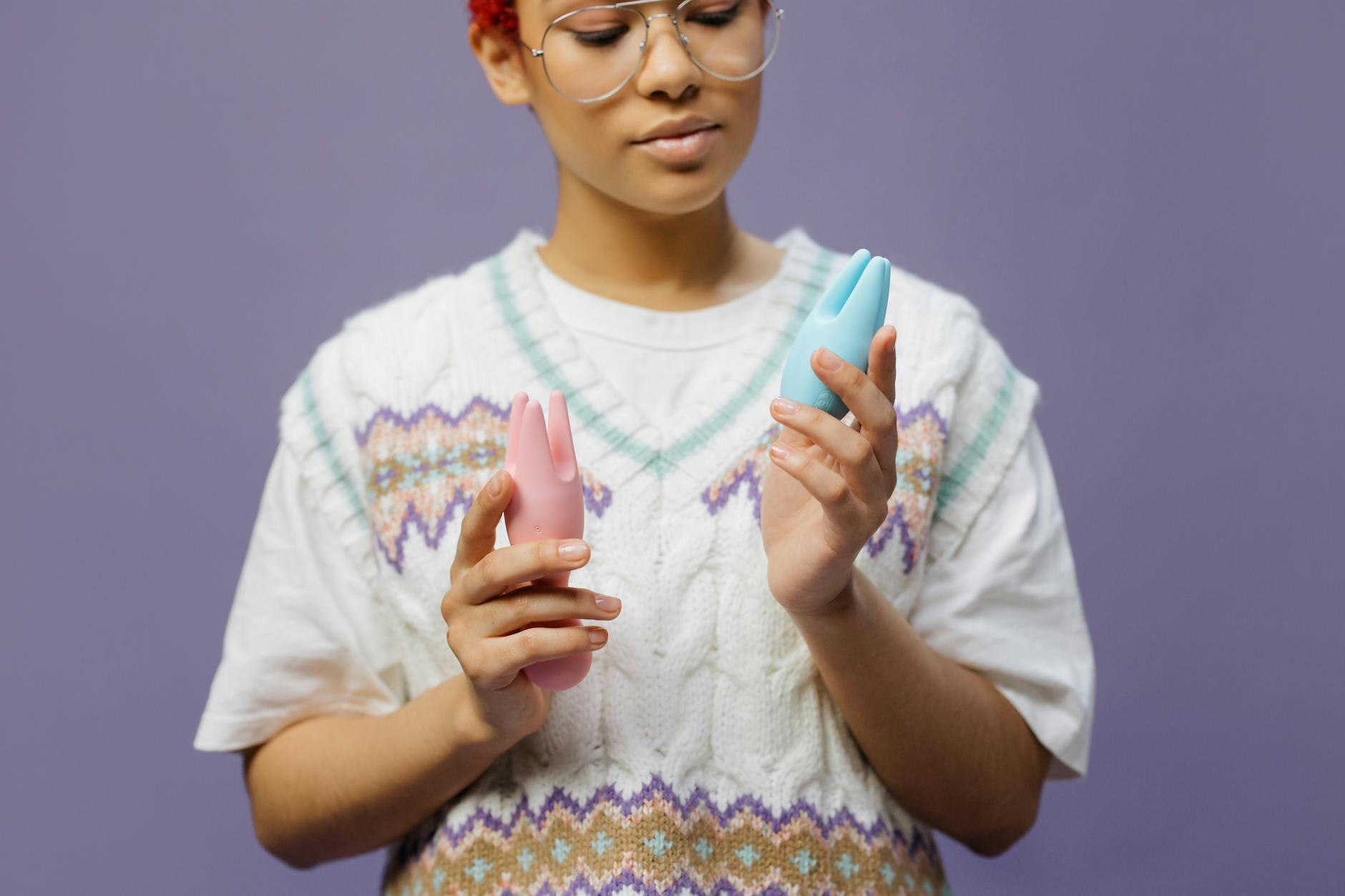
Here's the thing about arousal timelines
One person's body is ready. The other's isn't. You both know it. And for a lot of couples, this mismatch becomes the invisible third presence in the bedroom—the thing nobody names but everybody feels. The faster partner waits and tries not to seem impatient. The slower partner feels rushed, which makes them even slower. Both of you end up frustrated, and neither of you is actually enjoying what's happening.
This isn't a character flaw. It's not laziness or low libido or anything worth feeling guilty about. Bodies warm up on different schedules. That's normal. That's human. And it's also completely solvable.
Why arousal speed matters (and why it's not about desire)
Arousal speed and arousal capacity are totally separate things. You can have enormous desire for your partner and still need longer to get physically ready. Desire lives in your brain and heart. Arousal—the physical part, the blood flow, the lubrication, the nerve activation—that's a different system entirely. It can move at its own pace, independent of how much you want to be touched.
What makes this tricky in partnerships is that we're taught to sync them up. Good sex looks like both people reaching peak arousal at the same moment and then moving together. That's not how bodies actually work, especially over time. A partner who took ten minutes to warm up at twenty-five might need fifteen at thirty-five. Someone who was always quick might slow down after a health shift, a medication change, or just the wearing-down of routine.
The couples I work with who handle this best aren't trying to match each other. They're giving permission to move at different speeds.
What a lemon vibrator actually changes
A clitoral vibrator like the Lem shortens the gap between your arousal timelines without making either person feel broken. Here's how:
For the faster partner, it gives you something to do while waiting that feels integrative rather than lonely. You're not sitting on the edge of the bed checking your phone. You're touching your partner. You're involved. For many couples, this single shift—from waiting to participating—changes the entire emotional temperature of the experience.
For the slower partner, it removes the pressure to perform arousal on someone else's timeline. You're not trying to convince your body to speed up to meet your partner halfway. You can actually feel pleasure building at the pace that's genuine for you. And because the faster partner is now engaged rather than waiting, you don't have to manage their impatience along with your own sensation. That mental load drops, which ironically often makes arousal come faster.
The lemon vibrator creates what I call "parallel pleasure." You're not in sync, but you're in it together.
How to actually use this without it feeling awkward
First: talk about it before it's happening. Not in a clinical way. Just honest. "Hey, I notice we warm up at different speeds and I want to try something that makes it better for both of us." That conversation sets the tone that this is a shared problem with a shared solution, not one person fixing themselves for the other.
Second: get clear on whose tool it is. The lemon vibrator works best as the slower partner's tool for their own pleasure. You're not trying to speed them up. You're supporting their arousal pathway while they're with you. This is crucial. It's not a prop to make them match you faster. It's permission to go at their actual pace.
Third: experiment with timing and positioning. Some couples like the slower partner to use the vibrator first—solo, or while touching their partner—to get themselves to a certain baseline. Then you transition into partnered activity. Others like it in the middle of sex, when one person needs a reset or a different kind of stimulation. Some use it throughout.
There's no right moment. You're finding what doesn't create distance or shame.
The thing nobody talks about: the emotional layer
When arousal speeds are mismatched, the slower partner often carries shame about it. They interpret their own body's pace as a problem or a reflection of how much they want their partner. That's backward and it's also incredibly common. The faster partner sometimes interprets the wait as rejection or loss of interest. That's also wrong, but it feels true in the moment.
A lemon vibrator doesn't fix the emotion, but it removes the conditions that create it. When the slower partner isn't being waited for, they stop feeling broken. When the faster partner is actively engaged, they stop feeling rejected. The tool becomes proof that you're not working against each other.
I've had couples tell me that using a clitoral vibrator together shifted something fundamental in how they experience pleasure as a pair. Not because it made them cum faster or harder—though sometimes it does—but because it made them feel genuinely on the same team for the first time in years.
What if only one of you wants to use it
This is common. One partner is enthusiastic. The other is hesitant or skeptical. Here's what actually helps: let the skeptical partner stay skeptical. Their job is not to suddenly love the vibrator. Their job is to be open to the fact that their partner's pleasure matters and that supporting their partner's pleasure is intimate.
You don't both have to want the same things. You both have to respect each other's needs. Sometimes that means one of you uses a tool while the other is present and engaged. That's not less intimate. It's actually quite generous.
Start small. How to Use Lemon Vibrators When You Want to Explore Alone First walks through building comfort with a lemon vibrator on your own time. That might be the bridge that makes it easier to introduce into partnered sex later.
Why a lemon vibrator specifically
The design of lemon clitoral vibrators—air-suction technology that works through gentle pressure rather than direct friction—makes them less jarring than traditional vibrators. You don't go from zero to intense. The sensation builds gradually, which means the slower partner can actually feel their own arousal happening rather than jumping straight to something artificial.
Also: lemon vibrators are quiet and discreet, which matters if either of you feels self-conscious. You can have all the emotional benefits of using a toy without it feeling performative or clinical.
A different way to think about timing
When couples are synced in arousal speed, sex often feels efficient. Both people are ready, so you do the thing and move on. That's not bad. But it also means you miss a lot of the pleasure that happens in the in-between. How to Use Lemon Vibrators When Arousal Takes Longer to Build explores this in more depth, but the core idea is worth sitting with here: the slower partner's timeline isn't a problem to solve. It's an invitation to slow down together.
When you stop fighting your different arousal speeds and actually work with them, sex becomes less about synchronized performance and more about sustained pleasure. That's not a compromise. That's actually better.
When to reach out for support
If the arousal mismatch is tied to something deeper—resentment, disconnection, different libidos overall—a vibrator isn't going to solve that. It might even feel like a band-aid that makes the real issue easier to avoid. If you've tried this and it's not helping, or if you're feeling more distant rather than less, talking to a couples therapist is the move. How Lemon Vibrators Help When Physical Intimacy Feels Mismatched With Emotional Connection covers this angle, but the short version is: physical tools work best when emotional connection is already there.
Mismatched arousal speeds are one of the easiest sexual problems to solve. You're not fighting biology. You're just making space for two different timelines to coexist. A lemon vibrator is just the tool that makes that coexistence actually pleasurable for both of you.
Frequently asked questions
Will using a vibrator make my partner feel like they're not enough?
Not if you frame it right. The vibrator isn't replacing your partner—it's supporting your own arousal while they're with you. The fastest couples I work with are the ones who make this distinction clear from the start. "I want to use this because I want more pleasure, and I want you here while I do it." That's not about your partner being insufficient. That's about both of you having what you need.
How do I bring this up without making it seem like I'm complaining about them?
Start with yourself, not them. "I've noticed my arousal takes longer than it used to, and I want to explore ways to make sex feel better for me." Not "You rush me" or "You're not patient enough." You're naming your own experience and taking ownership of your own pleasure. That invites partnership instead of defensiveness.
Is it weird if one person uses a vibrator and the other doesn't?
Not even a little. Sex is allowed to look different from what you imagined. One person using a clitoral vibrator while the other uses their hands or is inside them or is just present and engaged—that's normal and hot and deeply intimate when both people want it.
What if my partner thinks vibrators are "cheating" or less real?
That's usually rooted in insecurity, not logic. A vibrator is a tool, not a substitute. You might ask your partner what specifically worries them. Is it that they think it means they're not enough? Is it that they think pleasure from a toy doesn't count? Is it religious or cultural? Once you know what the actual concern is, you can address it instead of arguing in circles.
How often should we use a vibrator if we have mismatched arousal speeds?
As often as it helps. Some couples use a lemon vibrator most times they have sex. Others use it once a week or less. The point isn't consistency. The point is removing the friction from your arousal mismatch. Use it as much as that requires.
Can a vibrator speed up the slower partner's arousal over time?
Sometimes, but that's not the goal. The goal is pleasure on their timeline, not acceleration. That said, some people do find that using a vibrator regularly makes their own arousal pathway more efficient because the pressure is off. When you're not trying to speed up, you often do.