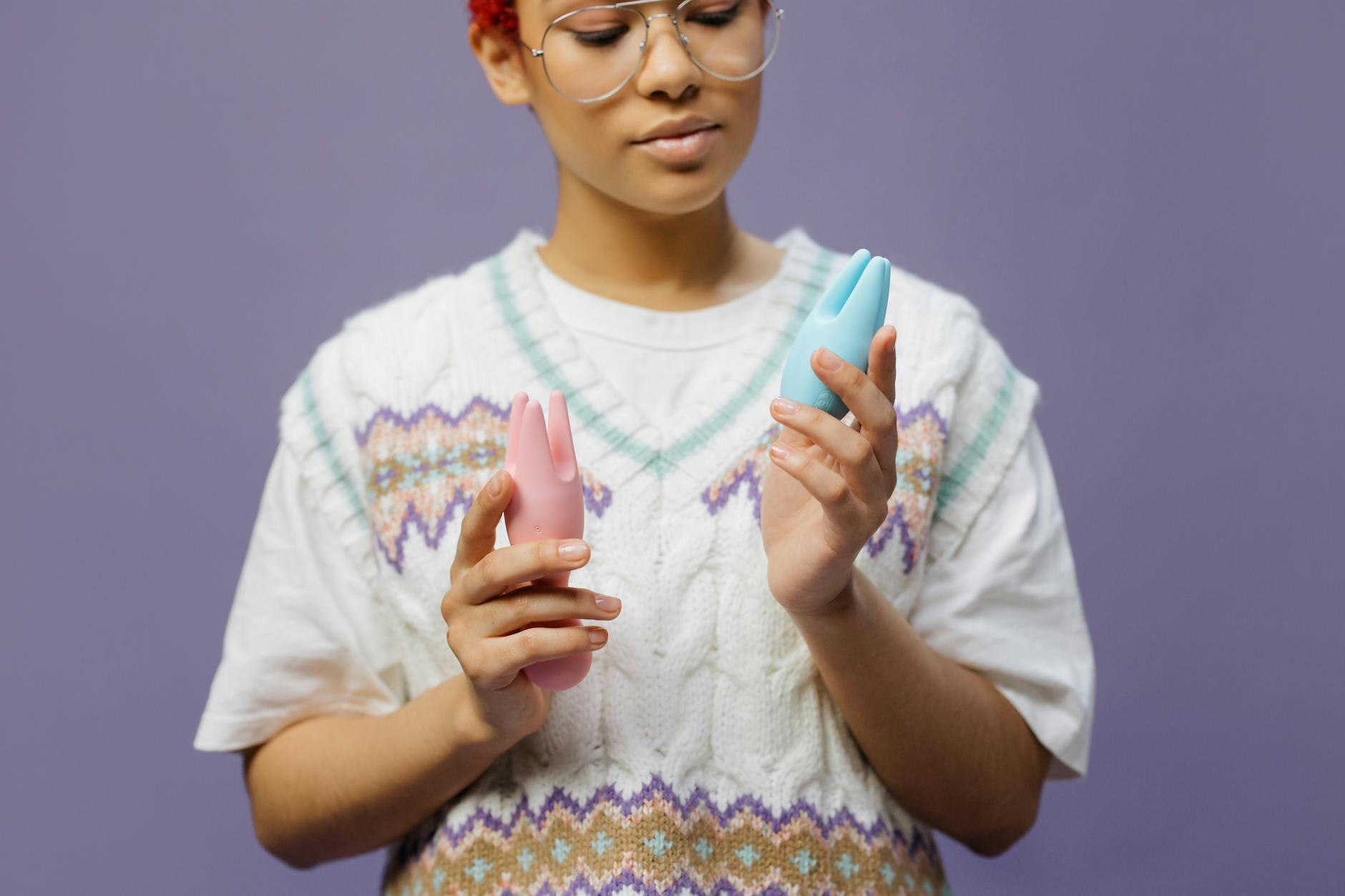
Here's what actually changes when hormones shift
You've probably noticed it. Arousal doesn't arrive on the same schedule anymore. Sometimes it builds fast. Sometimes it takes forever. Sometimes it barely shows up at all, even when you want it to. That's not a sign your body is failing you. That's hormones doing what hormones do. Estrogen, testosterone, and progesterone all influence how your nervous system responds to touch. When those levels fluctuate, the timeline of arousal shifts with them.
The frustrating part? You're waiting for the same sensation that used to come automatically, and your brain starts wondering if something is permanently wrong. It's not. It's just different now.
How hormonal shifts change physical response
Think of arousal as a chain reaction in your body. Touch arrives at your skin. Nerves send signals to your brain. Your brain floods your genital tissue with blood. That increased blood flow makes the clitoris swell and become more sensitive. The whole process creates the sensation we call arousal.
Hormones influence every step of this chain. Estrogen helps maintain the tissue thickness in your vulva and vagina, which affects how quickly sensation registers. When estrogen drops, that tissue becomes thinner and potentially less responsive to the same intensity of touch that used to work. Testosterone drives desire and the speed of physical response. Lower testosterone can mean arousal takes longer to build.
Progesterone slows everything down a bit. During the luteal phase of your cycle, you might notice arousal takes longer or feels more muted. This is normal.
Here's what matters: none of this means you've lost the capacity for pleasure. You've just changed the conditions under which pleasure arrives.
Why the timeline becomes unpredictable
Three reasons arousal might feel random right now:
One: your hormones are actually fluctuating more than you realize. If you're cycling, those changes from week to week are real. If you're on hormonal birth control, those shifts happen at a different rhythm than natural cycles. If you're approaching menopause, hormones might spike and drop unpredictably. Tracking your cycle or your moods can help you see the pattern, even when it feels chaotic.
Two: your nervous system is more sensitive to context. Stress, sleep, and emotional connection matter more now. A lemon clitoral vibrator can help bridge that gap, which we'll get to. But it's worth understanding that "no arousal" often means "wrong environment" or "tired brain," not "broken body."
Three: you might be comparing yourself to your own past. If arousal used to arrive in five minutes and now takes twenty, your brain calls that "slow." But slow isn't failure. Slow is different.
What lemon vibrators do differently when arousal is unpredictable
The design of lemon clitoral vibrators matters here. Unlike wands or other toys, the lem vibrator uses air-suction stimulation. That means it doesn't rely on the intense friction that wands need to work. Friction requires a certain baseline of blood flow and tissue responsiveness. Suction can work even when arousal is partial or delayed.
Think of it like this: a wand needs your tissue to be already fairly swollen and sensitive to feel good. Suction can gently draw blood into the tissue while simultaneously stimulating the nerves. So lemon sexual toys can actually help arousal build, rather than only rewarding arousal that's already there.
When hormones are shifting and your timeline is unpredictable, that's a game changer. You're not waiting for arousal to arrive and then using a toy. You're using the toy as part of the process that gets arousal to arrive.
How to use a lemon vibrator when your arousal feels off
Start without pressure. Set a pattern on the lem vibrator to something gentle, maybe level two or three. Give yourself permission to use it for five minutes and see what happens. You're not trying to orgasm. You're not trying to "prove" you can still get aroused. You're just exploring what your body can do right now.
Many people find that the suction sensation itself is calming. It creates a focused point of stimulation that can quiet the mental noise. That alone can help arousal build, because arousal needs attention. A busy brain doesn't produce the blood flow and nerve activation that pleasure requires.
If fifteen minutes pass and nothing is happening, that's fine too. Sometimes your body is tired or stressed or just not interested. That's real and it's valid. The point of using a toy isn't to force arousal where it doesn't exist. It's to make arousal easier to find when your hormones are making the path more complicated.
What changes when you understand your hormonal timeline
One of the most useful things you can do is actually track when arousal feels easier and when it feels harder. You don't need an app. A notes page with "good arousal day" or "sluggish today" is enough. After a few weeks, patterns usually emerge. Your body isn't random. It's responding to hormones, stress, sleep, and how connected you feel to your partner or yourself.
Once you see the pattern, you can plan differently. If your luteal phase always feels slower, maybe you schedule solo exploration time then, when you're not comparing yourself to how you felt in your follicular phase. If stress kills arousal faster now, you build in more warm-up time. If hormonal birth control changed your timeline, you adjust your expectations and your foreplay duration.
Using lemon clitoral vibrators becomes easier when you're not fighting your own rhythm.
How to talk to a partner about unpredictable arousal
If you're with someone, the conversation matters. "My arousal timeline changed" is important information. "I might need more time now" or "Sometimes suction feels better than friction" are useful specifics. But avoid "my body is broken." Your body isn't broken. It's responding to hormonal realities that are outside your control.
A good partner cares more about the actual you than the version of you from a year ago. That means being willing to adjust pace, try different stimulation, and understand that some days will be faster and some days will be slower. How to use lemon vibrators when you need extra stimulation during partnered sex covers this more fully.
Many couples find that when arousal takes longer, it actually deepens the experience. You're not rushing. You're exploring. That's often better.
When to see someone about hormonal changes
If arousal completely disappeared and isn't returning after a month or two, that's worth discussing with a doctor. It could be hormonal, it could be medication side effects, it could be something else entirely. A good GP or gynaecologist can help.
If the unpredictability is paired with mood swings, sleep disruption, or hot flashes, you might be entering perimenopause or experiencing hormonal shifts from a new medication. Both are manageable with the right support.
Don't wait for arousal to come back on its own if something feels truly broken. Sometimes it does. Sometimes it needs help. How lemon vibrators help when arousal takes longer after 40 covers this phase more specifically.
The bottom line
Unpredictable arousal after hormonal changes is one of the most common experiences people don't talk about. You're not alone in this. Your body isn't failing. It's responding to chemistry. Lemon vibrators, with their unique suction design, can help bridge the gap between wanting pleasure and the time it takes arousal to arrive. Give yourself permission to adjust your expectations, explore what works now, and understand that different is not worse. It's just different.
People also ask
How long does it take for arousal to come back after hormonal changes?
There's no universal timeline. Some people adjust within weeks. Others take months. If you're on hormonal birth control, it might stabilize after three cycles. If you're approaching menopause, arousal patterns might shift every few months for a year or more. The key is tracking your own body, not comparing it to anyone else's. What matters is knowing your new normal, not chasing your old one.
Can lemon suction toys help arousal build faster when hormones are off?
Yes, often. Because suction doesn't require the same baseline blood flow that friction-based toys need, a lemon clitoral vibrator can work as part of the arousal process, not just after arousal has already arrived. This makes them particularly useful when your timeline is unpredictable. Start with a gentle pattern and spend five to ten minutes exploring what your body can do right now.
Should I use lubricant with a lemon vibrator when arousal feels slow?
Absolutely. Even when arousal is building normally, lubrication makes suction toys more comfortable. When arousal is unpredictable or delayed, lube becomes even more important. It reduces friction and makes the sensation more pleasurable. Water-based lube works best with silicone toys like the lem vibrator.
Why does my arousal feel fast some days and slow on others?
Your hormones are fluctuating. If you're menstruating, your estrogen and progesterone change throughout your cycle, which directly affects arousal speed. If you're on hormonal birth control, the steady hormone dose still creates weekly variations. If you're in perimenopause, hormones can swing wildly. Stress, sleep, and emotional connection also matter hugely. Tracking these factors helps you understand your own pattern.
Is unpredictable arousal after hormonal changes permanent?
Not necessarily. If you're on a new medication or birth control, your body often adjusts within a few months. If you're in perimenopause, patterns will eventually stabilize after menopause. If you're cycling normally, understanding your cycle helps you work with your hormones instead of against them. What feels chaotic now often becomes predictable once you know what to look for.
Can I use lemon vibrators every day when arousal is unpredictable?
Yes. Using a lemon clitoral vibrator regularly doesn't make your body dependent on it. It also doesn't numb you. What it does is give you reliable access to pleasure on days when arousal might be harder to find naturally. Some people use them daily. Others use them a few times a week. There's no wrong answer. Listen to what feels good and sustainable for you.