
Here's what nobody tells you about mismatched sensitivity
One partner orgasms reliably in seven minutes. The other needs twenty. You've been having sex for years, and this gap hasn't closed, hasn't even narrowed. What changes is the resentment. Whoever finishes first learns to hide it. Whoever needs longer gets faster, and both of you feel worse.
This isn't a problem to solve with endurance or willpower. It's a mismatch in how your nervous systems respond to stimulation. And a lemon vibrator doesn't fix the mismatch. It bypasses it entirely.
Why sensitivity differences happen in the first place
Sensitivity to touch isn't about attraction or arousal. It's physiology. Some people have naturally higher nerve density in the clitoris and surrounding tissue. Others have lower baseline sensitivity, which means they need more intense or sustained stimulation to reach orgasm. Hormonal shifts, stress, medication, past trauma, and relationship dynamics all dial sensitivity up or down.
Here's the part that matters: these differences are rarely equal. And the longer you ignore them, the more both of you start calibrating your pleasure around the other person instead of yourselves.
One partner learns to rush. The other learns to fake it. The gap doesn't change. The disconnection does.
How lemon clitoral vibrators solve this without either person sacrificing
A lemon vibrator works through suction and gentle pulsation on the clitoris, not friction. This has three advantages when partners have different sensitivity levels.
First, suction stimulates differently than fingers or a tongue ever could. It creates sustained, consistent pressure that doesn't require the sensitive partner to work harder or wait longer. The sensation builds in its own rhythm, independent of a partner's pace.
Second, the person with lower sensitivity can use the lemon vibrator at their own intensity level, starting with gentler patterns and moving to stronger ones without needing a partner to speed up or increase pressure. Meanwhile, the more sensitive partner can enjoy foreplay or manual stimulation at whatever pace feels right. You're both getting what you need simultaneously.
Third, introducing a vibrator into partnered sex often feels like you're both choosing it together, which reframes the whole dynamic. You're not fixing a problem. You're exploring something new as a team.
The actual mechanics of using it with different sensitivity levels
Start by talking about what each of you wants from the experience. Not romantically. Practically. "I want to feel less rushed" is different from "I want to come at the same time." These deserve separate conversations.
One approach: the more sensitive partner uses the lemon vibrator while the less sensitive partner focuses on penetration, manual stimulation, or foreplay. The vibrator isn't a replacement. It's running on its own timeline, which frees both of you.
Another approach: take turns. One partner uses the vibrator while the other focuses on what feels good to them without pressure to match speed or timing. This removes the cognitive load of staying synchronized.
A third approach: both of you use it. Yes, simultaneous clitoral vibrators exist. They're not common, but they work. If you're both using a lemon vibrator on your own bodies, you're both getting the sensation you need at the intensity you need it, which can genuinely synchronize things without anyone compromising.
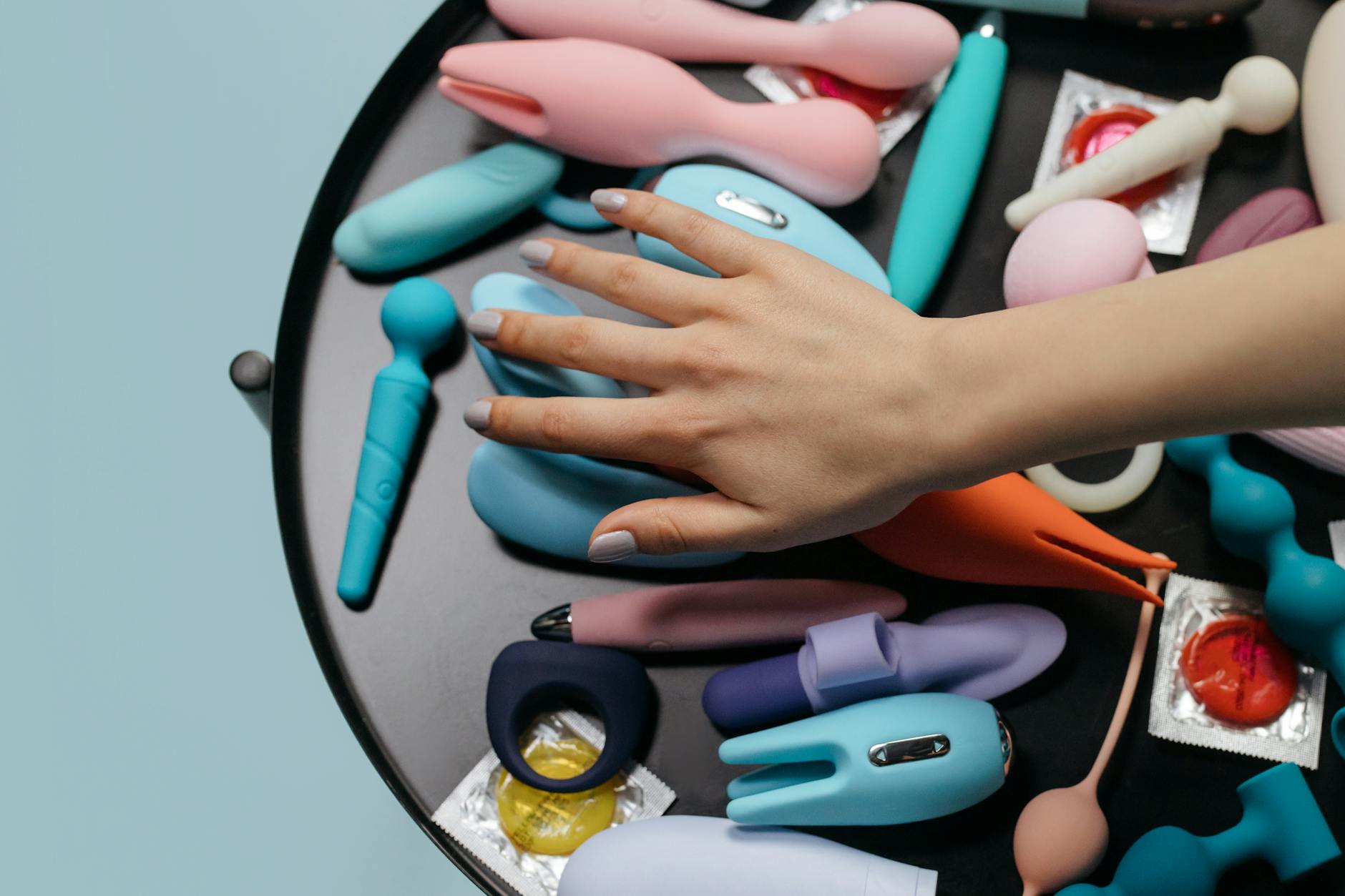
Photo by cottonbro studio on Pexels
What changes emotionally when you stop forcing synchronization
Mismatched sensitivity breeds resentment quietly. Over years, it becomes a story you tell yourself: "My partner doesn't want sex like I do" or "I'm taking too long." Neither is true. But the narrative sticks.
When you introduce a tool that works with your nervous systems instead of against them, that story softens. You're not broken. You're not incompatible. You just have different responsiveness timelines, and you've found a way to honor both.
This sounds like a small thing. It isn't. One of my couples told me after introducing a lemon vibrator into their sex life that it was the first time in years they'd both orgasmed without one person feeling like they were waiting. That shift rippled into the rest of their intimacy. They touched more. They initiated more. They stopped apologizing for their own pace.
That's not about the vibrator itself. That's about removing a source of quiet shame from the bedroom.
The conversation you actually need to have first
Don't lead with "Your sensitivity is different, so we need a vibrator." That's not inviting, it's clinical.
Instead: "I want us both to actually enjoy this. I've been thinking about introducing something that might help us both relax without worrying about timing."
Then listen. Ask what they've wanted from sex but haven't felt safe saying. Ask if they've felt rushed or impatient. Ask what intensity level feels right to them on the rare occasions when there's no pressure.
If your partner is hesitant about vibrators specifically, that's real. Start with education. Explain what suction does, why lemon vibrators work differently than wand vibrators, how you both get to set your own pace. Offer to let them explore it alone first if that helps.
Resistance usually isn't about the tool. It's about fear that you're not attracted to them, that something's wrong, or that they're not enough. Those fears deserve to be named and addressed separately from the vibrator conversation.
How sensitivity differences actually shift over time
Hormones fluctuate. Stress ebbs and flows. Medication changes. Relationship dynamics shift. The partner who needed thirty minutes six months ago might need twenty now, or forty. This isn't failure. This is bodies being bodies.
What matters is that you've built a system that adapts. If you're using a lemon vibrator because it works with different sensitivity timelines, you're already flexible. You adjust intensity, patterns, pacing. That flexibility is the real win, not achieving simultaneous orgasm on any particular night.
Some couples find that over time, as pressure lifts and pleasure becomes genuinely mutual, sensitivity does shift closer together. Not always, and not as a goal. But the removal of performance anxiety and resentment does something to the nervous system.
When to expect changes and when to adjust expectations
If one partner is significantly lower in sensitivity, it might not be a mismatch you're solving. It could be medication, hormone levels, or underlying health factors worth discussing with a doctor. A lemon vibrator helps, but it's not a diagnosis or treatment.
If the gap widens suddenly, check in. Ask about stress, sleep, relationship dynamics, and whether anything feels different emotionally. Sometimes reduced sensitivity is the body's way of saying something's off.
If one partner feels resentful even with the vibrator in place, the issue might not be sensitivity at all. It might be that you're not feeling desired, or that sex itself feels obligatory rather than mutual. Those are different problems that need different solutions.
Introducing a lemon clitoral vibrator helps with sensation and timing. It doesn't fix disconnection or deeper relationship issues. Know the difference.
The outcome that actually matters
Most couples I work with who introduce vibrators into mismatched-sensitivity situations report the same thing: it gave them permission to stop pretending. The faster partner stopped faking slowness. The slower partner stopped faking speed. You're both just doing what feels good.
That permission shifts everything. Suddenly sex isn't a negotiation between two different timelines. It's two people exploring pleasure independently while being together. That's not compromise. That's liberation.
When you both get what you need without someone sacrificing, the entire experience changes. You're more present. You touch more outside the bedroom. You want each other more because you're not carrying resentment into intimacy.
A lemon vibrator isn't a miracle fix. But it is permission to stop forcing your bodies into the same rhythm and start honoring how they actually work.
Frequently asked questions
Can we use a lemon vibrator if we're uncomfortable with toys in general?
Start by exploring it alone first. Let the less open partner use it solo, no pressure to integrate it into partnered sex immediately. Often, curiosity grows once you experience how it actually feels. The idea of a sex toy is weirder than the reality.
What if one partner feels insecure about using a vibrator during sex?
Insecurity usually points to a deeper fear: am I not enough? Address that directly. A vibrator isn't a replacement for your partner. It's a tool that lets both of you feel good simultaneously. Your partner's sensitivity difference exists whether or not you introduce a vibrator. The vibrator doesn't create the mismatch. It reveals it, and then solves it.
How do I know if we need a lemon vibrator or if the sensitivity gap is actually a relationship problem?
If the gap exists but you're both satisfied and not carrying resentment, you don't need anything. If there's resentment, frustration, or one person feeling undesired, that's worth addressing. Sometimes a vibrator helps. Sometimes you need a deeper conversation about desire, attraction, or emotional intimacy. Often both.
Can we use the same lemon vibrator, or do we need individual ones?
One shared vibrator works fine if you're taking turns. Individual vibrators give you more freedom to use them simultaneously if you want. Cost depends on your priorities. Test with one first.
What if a lemon vibrator doesn't help close the sensitivity gap?
Then the issue might not be sensation-based. Talk to your partner about what's actually happening. Is one of you less interested in sex overall? Is there stress, medication, or health factors at play? Is the real issue that you're not feeling emotionally close? Vibrators solve sensation timing. They don't solve desire mismatches.
How do we introduce this conversation without making someone feel broken or inadequate?
Lead with curiosity, not problems. "I want us both to actually enjoy this" opens doors. "Your sensitivity is wrong" slams them. Frame it as exploration, not fixing. And listen. If your partner has concerns, those are real and worth understanding.
What comes next
Mismatched sensitivity in partnered sex isn't a failure. It's biology. And when you stop fighting it and start working with it instead, everything shifts. A lemon vibrator helps with that shift. But the real work is the conversation, the permission, and the choice to honor how both of your bodies actually work.
Ready to explore how this might work for you and your partner? Start with a conversation, not a purchase. If you want to learn more about navigating intimacy in long-term partnerships, how lemon vibrators help when partners have mismatched arousal speeds covers a related angle on timing and desire.
Your pleasure matters. Your partner's pleasure matters. And you don't have to sacrifice one for the other.
References
- Basson, R. (2005). "Women's sexual dysfunction: Revised definitions and classifications." Current Sexual Health Reports, 2(3), 141-149.
- Komisaruk, B. R., & Whipple, B. (2005). "Functional MRI of the brain during orgasm in women with complete spinal cord injury." Progress in Brain Research, 152, 127-139.
- Meston, C. M., & Frohlich, P. F. (2000). "The neurobiology of sexual function." Archives of General Psychiatry, 57(11), 1012-1030.