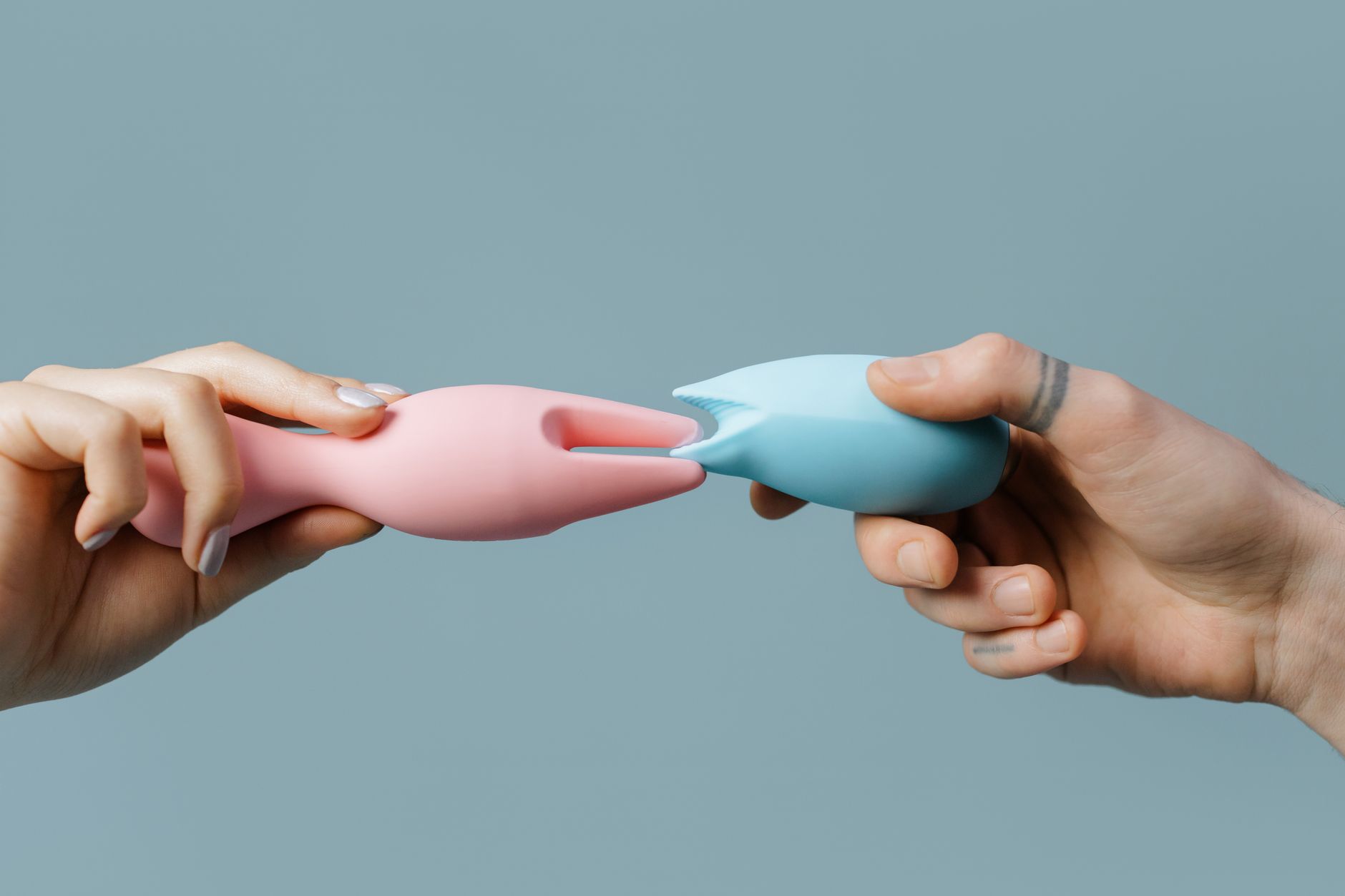
How Lemon Vibrators Help When You Feel Disconnected From Pleasure After Stress
Let's be real. When you're running on cortisol and fumes, your body doesn't care about pleasure. Your nervous system is in survival mode. The signals between your brain and clitoris go quiet. Your usual triggers don't work. Everything feels numb or too much at once. This isn't broken desire. This is what chronic stress does to sensation.
Here's the thing nobody explains clearly: pleasure and stress are on opposite neural circuits. Your parasympathetic nervous system (the one that says "yes, sensation") shuts down when your sympathetic nervous system (the one that says "run or fight") is dominant. You can't feel both at the same time, and stress always wins.
That's where lemon vibrators change the equation. They're not trying to match the intensity your body used to crave. They're designed to coax your nervous system offline in a way that lets sensation come back.
Why intensity backfires when you're stressed
There's a mythology around pleasure recovery that goes like this: if you're numb, you need more stimulation. Stronger vibration. Faster patterns. Push through.
This is exactly backwards. When stress has flattened your sensation, aggressive stimulation doesn't wake things up. It confirms to your nervous system that everything is too loud, too much, too threatening. Your body doubles down on shutdown.
Clitoral suction works differently. The Lem and other lemon vibrators use gentle air-pulse technology instead of traditional vibration. Instead of banging against tissue, suction creates a rhythmic pressure wave that moves through the clitoral complex, activating nerve endings without the aggressive mechanical friction that stressed bodies reject.
Your clitoris has 8,000 nerve endings. Suction stimulates them through a wave pattern that your body can feel gradually building, rather than a sudden all-or-nothing jolt. For a nervous system that's been trauma-responsive or stress-dominant for weeks or months, this gentleness is what allows sensation to creep back in.
The reset mechanism: why suction helps your nervous system downshift
When you use a lemon clitoral vibrator on a lower setting, something specific happens. The rhythmic pressure creates a feedback loop to your vagus nerve, which is basically your body's off-switch for stress. This isn't mystical. It's parasympathetic activation through rhythmic sensory input.
Think of it like bilateral stimulation in EMDR therapy, but for pleasure. Your brain gets a gentle, repetitive signal that says "this is safe, this is manageable, this is here." Over time, your nervous system starts to believe it.
Most stressed people need 15-25 minutes of this kind of gentle input before their body starts responding. The mistake is stopping at five minutes and deciding it doesn't work. You're not looking for instant fireworks. You're looking for a slow thaw.
Start with pattern 1 or 2 on the Lem. Let your clitoris get reacquainted with sensation at a volume level that doesn't feel invasive. Your goal is not an orgasm. Your goal is to feel something without it feeling threatening. That alone is the win.
How stress specifically numbs pleasure, and why this matters
Here's the neurobiology piece. Chronic stress elevates cortisol, which dampens dopamine production. Dopamine is the neurotransmitter that makes sensation feel good. When dopamine is low, even direct stimulation can feel neutral or annoying. Your brain isn't receiving the reward signal that would normally make you want more.
Additionally, stress tightens the pelvic floor. A chronically tight pelvic floor reduces blood flow to the clitoris and vulva, which means less engorgement, less sensitivity, less responsiveness. You're not lazy. Your body is literally locked up.
This is why the approach matters more than the toy. A gentle lemon vibrator combined with intentional pelvic floor relaxation can restart that cycle. The suction brings blood back to tissue. The rhythmic pattern teaches your nervous system that sensation can be safe. Dopamine production picks back up. Over sessions, your body remembers what pleasure felt like.
I've worked with countless clients who thought their pleasure was gone for good. What was actually gone was their parasympathetic availability. Once they spent three to four weeks with consistent, low-intensity play using a tool designed for their stressed nervous system, sensation came roaring back.
The practical reset: how to use lemon vibrators when you're stressed
Three steps, done consistently.
First, context matters. Don't try to rediscover pleasure in the same environment where stress lives. If work is triggering, don't do this in the bedroom you sleep in after scrolling work emails. Take a bath first. Change rooms. Light a candle. Give your nervous system permission to recognize "this is a different time."
Second, go genuinely slow. Set a timer for 20 minutes, not five. Use pattern 1. Lie down. This is not efficient. Efficient is the problem. You're training your nervous system to downshift, and that takes time. If it feels boring, that's okay. Boredom is your parasympathetic system starting to wake up.
Third, notice without judgment. You might feel: numbness, tingling, pressure, warmth, or absolutely nothing. None of these are failures. You're gathering data on what your nervous system can register right now. Week two will feel different from week one. Week four will feel different again.
Many people find that partnered touch helps bridge the gap. If you have a partner, having them hold you or touch your non-genital body while you use a lemon vibrator can amplify the parasympathetic signal. You're getting physical safety input from two directions at once.
When to layer in other support
Clitoral vibrators are excellent for reconnecting with sensation, but they're not a substitute for addressing the underlying stress. If you're in chronic work stress, relational conflict, or grief, the pleasure reconnection will feel shaky until those things get some support.
The ideal approach is threefold: addressing the external stressor (therapy, boundary-setting, time off), helping your nervous system regulate (breathwork, movement, consistent sleep), and gently reintroducing pleasure through tools that respect where your body is.
If you notice that lemon vibrators aren't helping after four weeks of consistent use, that's not a signal to buy a more intense toy. That's a signal to check in with a therapist or somatic practitioner about whether the stress itself needs direct intervention. Pleasure tools are excellent facilitators. They're not a fix for everything.
The permission piece: why this actually works
Here's what I see most often. People who are stressed think they should be able to snap back to their old pleasure pattern. They think if they just try harder, find the right toy, the right position, the right partner dynamic, sensation will come roaring back like it never left.
It doesn't work that way. Your nervous system has learned that it's not safe to drop into pleasure. That's a totally reasonable response to real stress. Fighting that learning creates more stress.
What works is permission. Permission to feel less than you used to feel, for a while. Permission to use a tool that's specifically designed for a downregulated nervous system. Permission to spend 20 minutes on this without expecting results. Permission to practice pleasure like you'd practice any other skill: gradually, consistently, without judgment.
Lemon vibrators are good at this because they're designed with gentle architecture. The suction pattern, the lower intensity ranges, the way the sensation builds—all of it communicates to your body: "You're safe here. We're going slow. Your pleasure matters, even if it looks different right now."
That message, repeated consistently, is what rewires your stress response around pleasure.
People also ask
How long does it take to feel pleasure again after stress kills your libido?
For most people, you'll notice subtle shifts within two weeks of consistent, gentle play. Real sensation engagement typically returns over three to four weeks. Some people take longer, especially if the stress is ongoing. The timeline depends on how long you were stressed, how deep it went, and whether the underlying stressor is resolved. The key is consistency over intensity.
Can you use a regular vibrator if you don't have a lemon vibrator?
You can, but you might need to dial down the intensity significantly. Traditional vibrators deliver rapid mechanical movement that can feel jarring to a stressed nervous system. Lemon clitoral vibrators use suction, which activates nerves through pressure waves rather than friction. This gentler mechanism is why they're so effective for reconnection work. If you only have a traditional vibrator, use the lowest setting and add extra lubricant to soften the sensation.
What if you feel nothing at all, even with a lemon vibrator?
Numbing that deep usually needs more than a toy. Check in with a therapist about what's driving the numbness. Is it depression? Dissociation? Are you still in the stressful situation? Are you trying this while your nervous system is still in threat mode? Sometimes the answer is not a better vibrator. It's reducing the actual stressor first, then reintroducing pleasure once your system has some real downtime.
Should you use a lemon vibrator with a partner or alone?
Both work, for different reasons. Alone, you can focus entirely on your own nervous system signals without managing anyone else's pace or expectations. With a partner, you get the added safety of physical closeness and attunement. Many people find that solo play first (to rebuild the skill), then partnered play (to rebuild intimacy), is the best sequence.
Is clitoral suction better than vibration for stress recovery?
For most people, yes. Suction creates a wave pattern that feels less aggressive and more rhythmic. Your nervous system responds better to rhythm and gradualness than to intensity and speed. That said, some people prefer vibration. If suction feels weird at first, try a lower setting for longer. Most people need an adjustment period before they prefer it to traditional vibration.
Can stress permanently damage your pleasure response?
No. Your nervous system is plastic. It can learn new patterns. What chronic stress does is teach your body that pleasure isn't safe right now. That learning can be unlearned. It takes time, consistency, and usually some support with the actual stress. But pleasure capacity doesn't disappear. It gets suppressed. There's a massive difference.
What comes next
Reconnecting with pleasure after stress isn't about finding the perfect toy. It's about giving your nervous system permission to downshift in a context where it feels safe. Lemon vibrators are excellent tools for this because they're designed with a stressed body in mind.
Start gentle. Stay consistent. Trust the process even when week two feels the same as week one. Your body remembers pleasure. It just needs the right conditions to feel safe enough to let it back in.
If you're struggling to move forward with reconnection, or if stress is ongoing and creating barriers to pleasure, reach out to us. We're here to help you think through the next step.