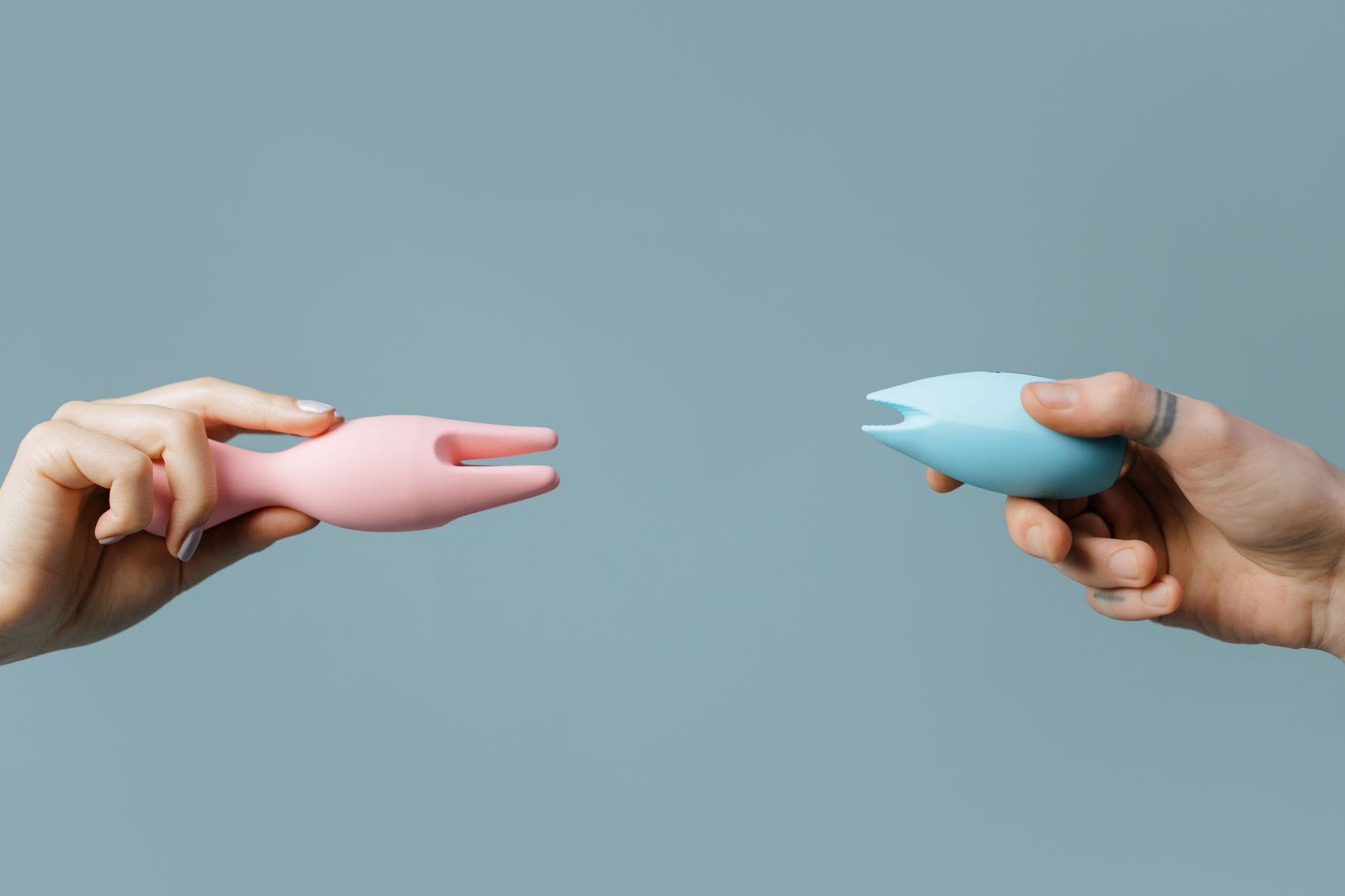
Let's talk about the elephant in the bed
Penetration hurts. Or it feels risky. Or your body tightens up the moment your partner moves that direction, which kills the whole mood and sends both of you into an awkward spiral of reassurance that solves nothing. You want to want partnered sex. Your partner wants closeness. But the mechanics don't work, and now you're both grieving something you thought you'd have.
Here's what I've seen work: stop centering penetration. I know that sounds like giving up. It's not. It's actually the path back to genuine connection.
Why penetration becomes the whole conversation
Culturally, we've wired partnered sex to mean penetration. If that's off the table, the brain defaults to "the sex isn't happening," which is wildly untrue but surprisingly hard to shake. What actually happens is you end up performing a version of sex that doesn't feel good for either of you, or you stop trying altogether.
When insertion causes pain—whether from vaginismus, endometriosis, pelvic floor dysfunction, or just plain anxiety—the nervous system learns that partnered touch equals threat. Your body isn't being difficult. It's protecting you. Fighting that response through sheer will makes it worse.
Lemon vibrators, especially air-suction clitoral stimulators like the Lem, offer a clean redirect: pleasure that doesn't require penetration, that doesn't depend on your partner's timing or rhythm, and that your body can actually enjoy without bracing for pain.
What penetration-free partnered pleasure actually looks like
Three things need to happen:
One: separate arousal from insertion. These are different events with different nerve endings. The clitoris has 8,000 nerve endings packed into a tiny area. The vaginal wall is far less sensitive, which is why you can have wildly satisfying orgasms from clitoral stimulation alone. A lemon clitoral vibrator like the Lem does one job beautifully: it focuses all the attention there, while your partner is present, touching you, or simply there with you.
Two: kill the performance pressure. When penetration is off limits, you and your partner can stop performing and start exploring. That sounds simple. It's revolutionary. Most couples have never tried sex that's just about sensation, without the invisible checklist of where this "should" go.
Three: rebuild nervous system trust. Pain or fear around penetration creates a reflex. The Lem breaks that pattern because it activates pleasure in a way that's completely under your control. Your partner isn't doing anything to you. You're both choosing pleasure together in a way that feels safe.
How to actually bring this into the bedroom
Start by naming what you want clearly. "I want us to have pleasure together, and I need that to not include penetration right now." That's not rejection. That's honesty.
Then decide who controls the vibrator. Some couples prefer the person with the vulva holding it while their partner touches them elsewhere—the collarbone, the inner thighs, the breasts. Some prefer the partner holding it, which creates a different dynamic of surrender and trust. Neither is better. Try both.
Set a boundary around penetration attempts. When your nervous system knows that insertion isn't coming, you can actually relax. That paradoxically opens you up. A lot of couples find that after weeks of exploration with the Lem, penetration becomes possible again—not because the pain went away magically, but because the fear response loosened.
The orgasms you didn't know were available
Here's the thing people don't usually mention: clitoral orgasms, especially ones that happen with a partner present and participating, feel different from intercourse-driven ones. More intense. More localized. Easier to reach. Some people experience their first real orgasms in partnered situations once they stop trying to make penetration work.
Most of my clients report that once the pressure to have penetration-based sex evaporates, they actually want to be sexual more often. The stakes feel lower. The pleasure feels more reliable. And your partner gets to witness you actually enjoying something, which is far more intimate than performing something that hurts.
When pain is telling you something medical
If insertion causes sharp, burning, or shooting pain, that's worth mentioning to a gynecologist or pelvic health specialist. Endometriosis, vaginismus, vulvodynia, and pelvic floor tension are all real, all treatable, and all worth ruling out. A lemon clitoral vibrator is a brilliant workaround while you figure that out, but it's not a replacement for medical evaluation if pain is the primary issue.
If fear or anxiety is driving the avoidance, a sex therapist who specializes in this can help rewrite that reflex. Lemnancy products are excellent tools within that process, not solutions by themselves.
Rebuilding intimacy without the pressure
The couples I've worked with who successfully navigate this transition do one thing consistently: they talk about what feels good, separate from what they think should happen. "I like it when you touch my neck while I use the Lem." "I love watching you enjoy this." "Your hands on my thighs feel perfect right now."
That conversation is the intimacy. Not the specific acts. Not the penetration. Just two people paying attention to each other's pleasure.
Lemnancy's Lem is designed for exactly this moment: when you want partnered pleasure, when traditional sex feels unsafe or impossible, and when you need something that puts the focus where it actually feels good. Air-suction technology doesn't require the kind of direct friction that can trigger pain reflex, and it's intuitive enough that both partners can stay present instead of troubleshooting logistics.
The permission you actually need
Here's what I want you to hear: a sex life built around what feels good instead of what you think should happen is not a compromise. It's an upgrade. Plenty of couples who have zero physical barriers to penetration wish they could have the kind of conversation that pain forces. You're already there. You've already done the hardest part, which is admitting that the standard script doesn't work for your bodies.
Now you get to write a different one. One that centers your actual pleasure. One where your partner gets to see you enjoy something. One where intimacy is about attention and presence instead of performance.
That's worth exploring. And the Lem makes that exploration feel less like a workaround and more like an actual choice.
People also ask
Can we still have partnered sex if penetration doesn't work for me?
Absolutely. Partnered sex is any sexual experience you share, not a specific act. When you remove the expectation that it has to include penetration, you open up dozens of other possibilities: manual stimulation, oral, toys, outercourse, or just being present while you pleasure yourself. Many couples find that removing the pressure to perform penetration actually deepens intimacy because the focus shifts to mutual pleasure instead of functional performance.
Will using a lemon clitoral vibrator with my partner make them feel less needed?
The opposite usually happens. When your partner watches you experience genuine pleasure with a tool, many report feeling closer and more turned on, not less. You're including them in something that feels good for you. That's vulnerable and intimate. Some partners feel relieved that they're not responsible for producing an orgasm, which takes huge pressure off. The key is framing it as "we're exploring this together," not "I'm doing this alone now."
How do I bring this up without hurting my partner's feelings?
Frame it around what you want, not what they're doing wrong. "I've been thinking about ways to make partnered sex feel better for both of us. I'd like to try exploring with a vibrator together. I think it could be really fun." Most partners would rather know you're in pain and need a different approach than continue with something that isn't working. If they react badly, that's data about the relationship that matters more than the sex itself.
Is it normal to have trouble with penetration after trauma?
Yes, extremely common. Your nervous system learned that penetration equals threat, and that reflex doesn't care about logic. A lemon clitoral vibrator can be part of rebuilding trust in your body's pleasure, especially if you're working with a trauma-informed therapist. Pleasure needs to feel safe before it can feel good. The Lem puts you in complete control, which many trauma survivors find essential for reclaiming their sexuality.
Can we still work toward penetration while using a vibrator?
Yes, but don't make that the goal. Make pleasure the goal. Healing happens when you stop white-knuckling your way through something uncomfortable and instead build positive associations with intimacy. Some couples find that after months of partnered play with a clitoral vibrator, penetration becomes possible again. Others find they don't care anymore, which is also fine. Follow what feels good, not what you think should happen next.
What if we both want penetration but it hurts for me?
That's the exact scenario where a lemon clitoral vibrator can transform things. Your partner can engage in whatever form of penetration feels safe for them while you get clitoral stimulation from the Lem. You're both getting what you need. You're both present. You're both experiencing pleasure. That's not a compromise. That's collaboration.