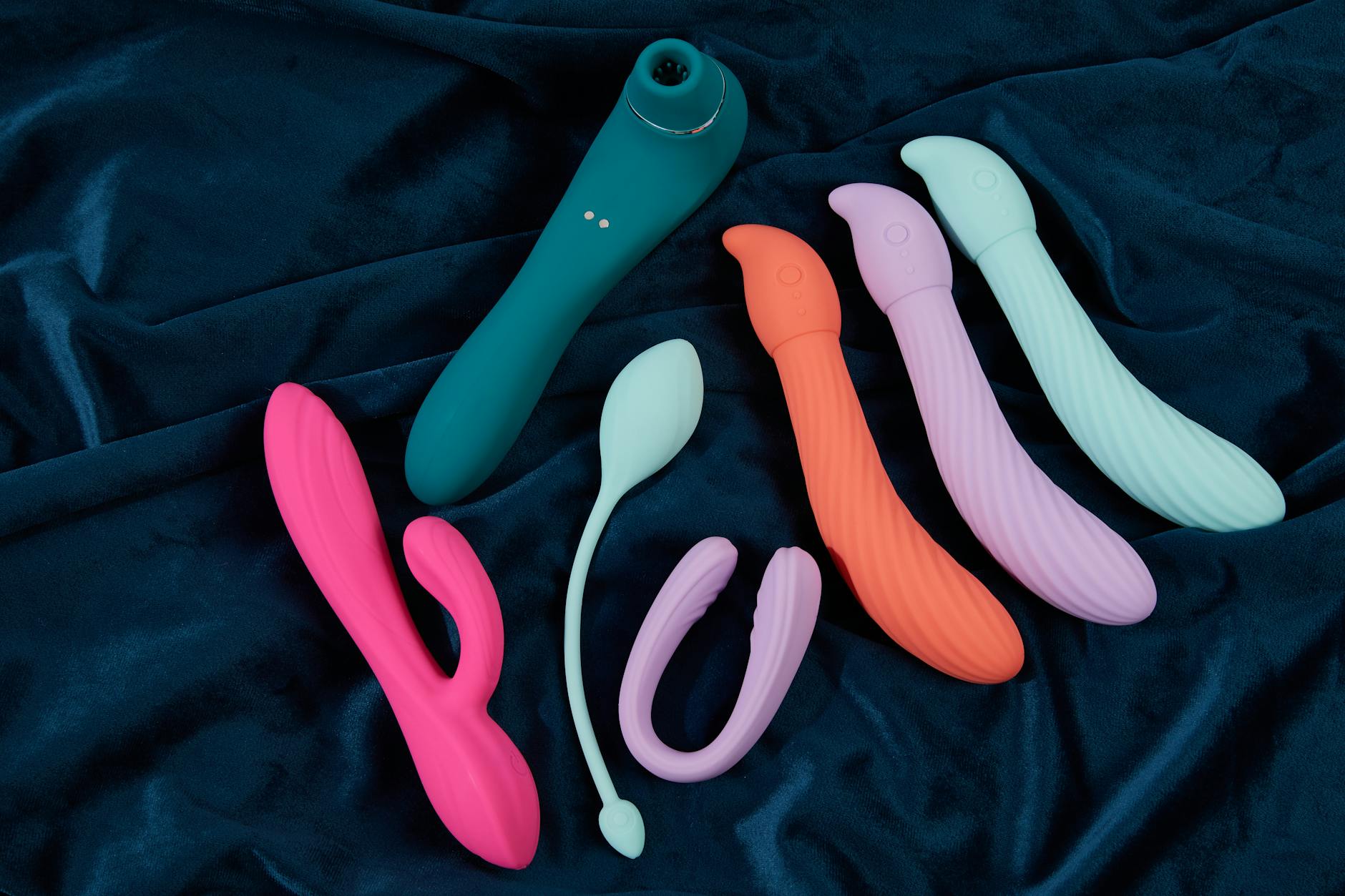
How Lemon Vibrators Help With Numbness and Reduced Sensation
When touch stops feeling like much of anything, suction-based clitoral vibrators work differently than traditional toys. Here's why sensation loss happens and how to rebuild it.
Your clitoris should feel like something. When it doesn't, when touch registers as pressure instead of pleasure, when you need more and more intensity just to feel anything at all, that's not a sign you're broken or losing your mind. That's desensitization, and it's way more common than anyone talks about.
The thing is, not all toys work the same way when sensation is already compromised. Traditional vibration can actually make numbness worse. But lemon vibrators, specifically the suction-based kind like the Lem, operate on a completely different principle. And that difference matters.
Desensitization doesn't mean your nerves died. It means your clitoral tissue has gotten used to a particular type of stimulation, so that stimulus now registers as background noise instead of signal. Think of it like hearing the hum of your refrigerator. It's loud, objectively, but your brain stopped noticing it months ago.
This happens for a few reasons. Chronic vibration at the same frequency, intensity, and pattern trains your nervous system to tune it out. Stress and cortisol suppress sexual response across the board. Certain medications (SSRIs, birth control with particular progestin profiles, blood pressure meds) can genuinely reduce clitoral sensitivity. Sometimes it's physical exhaustion from overuse. Sometimes it's relationship tension or emotional distance that your body is encoding as numbness.
Most vibrators work through oscillation. They move back and forth at a fixed frequency, usually somewhere between 50 and 200 Hz. When tissue is already desensitized, pure vibration alone just adds more of the same stimulus your nervous system has learned to ignore. You end up chasing higher intensities, which fatigues tissue further, which creates a feedback loop of numbness.
You're not gradually getting more sensation back. You're gradually getting less, even as you increase power.
Lemon clitoral vibrators use a different mechanism entirely. Instead of vibrating, they create gentle waves of suction and release around the clitoral bulb. This is a different nerve pathway. Where vibration hits fast and repetitive, suction creates a building, pulsing sensation that your nervous system can't simply tune out the same way.
Think of the difference between someone tapping your shoulder repeatedly (vibration) versus someone squeezing and releasing your hand (suction). Same area, completely different sensory experience. Your brain perceives them as distinct inputs.
For desensitized tissue, this matters because the suction approach doesn't require aggressive pressure to be felt. The Lem, for example, works at much lower intensities than people typically assume. Most users spend the first few sessions on patterns 1 through 3, not maxing out at level 10. That's the opposite of the traditional vibrator trap.
Here's the protocol I recommend to clients dealing with numbness:
Start absurdly low. Not "low for you." Low period. Pattern 1 on the Lem should feel almost subtle. If it feels like nothing, that's exactly where you are, and that's the baseline. Sit with it for 10 to 15 minutes anyway. You're retraining your nervous system, not chasing immediate pleasure.
Focus on frequency shifts, not intensity. One of the Lem's biggest advantages for desensitized tissue is that it has multiple patterns, not just "more power." Switching between patterns (say, patterns 2 and 4 alternating every 2 minutes) creates novelty without escalation. Your nervous system stays interested.
Build slowly over weeks, not days. This is the hardest part. If you rebuild too fast, you'll just recreate the same desensitization you're trying to escape. Give yourself at least two weeks at each intensity level before you consider moving up. Some people take a month. That's not slow. That's healing.
Warm up first. Because desensitized tissue often comes with arousal difficulty, spend 15 to 20 minutes on other kinds of touch before you use the Lem. A partner's hands, a wand on your thighs, whatever creates some baseline arousal. This primes the nervous system and makes the suction approach work better.
Here's what I see constantly: people rebuild physical sensation, then it plateaus, because the emotional or relational numbness is still running in the background. Your nervous system isn't dumb. If you're using the Lem while you're still anxious about your relationship, or stressed about being "broken," or afraid that sensation won't come back, your body will keep the gates mostly closed.
So alongside the tool work, you need:
Permission, not pressure. Stop timing yourself. Stop waiting for the "right" orgasm. You're not supposed to come on a lemon vibrator if you're desensitized. You're supposed to gradually feel more. That's the win.
Separation of concerns. If numbness happened in a partnered context (stress in the relationship, performance anxiety), you don't rebuild sensation by using the toy with your partner yet. Rebuild alone first. Then, once sensation is coming back on your own terms, you reintroduce partnership. Different phase, different conversation.
Reality check on meds. If you're on an SSRI or hormonal birth control and numbness started after you began it, talk to your prescriber about timing (taking your SSRI at night instead of morning, for instance) or alternatives. Sometimes a small adjustment makes a difference. Sometimes you need a different medication entirely. The Lem works best when your baseline nervous system function is healthy.
Rebuild sensation isn't linear. Most people report noticing something shifting between weeks 3 and 6. By week 8 to 12, if you're consistent and patient, most people feel a real return to normal sensation. Some take longer. Some had such severe numbness that it takes months.
What matters is this: you should feel progress. Not huge leaps necessarily, but small things like "oh, I felt that differently this week" or "I didn't need to go as high on the pattern." If you're not noticing any shift by week 8, it's time to check whether the emotional or medical piece needs attention.
The Lem is designed as a clitoral vibrator that uses gentle, progressive suction waves instead of raw vibration intensity. For people rebuilding sensation, that design matters. You can't accidentally overstimulate in the same way you can with a traditional vibrator. The patterns feel distinct from each other, which keeps your nervous system engaged. And the build quality means you're not chasing a toy that loses efficacy after 6 months of use.
I don't recommend it because Hello Nancy is my client or because I have any stake in it. I recommend it because in clinical practice, I've seen desensitized clients get sensation back faster with suction-based devices than with traditional vibrators. The mechanism just works better for the problem.
If you've been patient with the Lem for 12 weeks and sensation still isn't budging, it's worth checking in with a gynecologist who has some sex medicine training. Desensitization usually responds to the slow, methodical approach, but sometimes there's a medical piece (hormonal insufficiency, nerve involvement from pelvic floor dysfunction, medication side effect you weren't aware of) that needs professional attention.
Also reach out if numbness showed up suddenly alongside pain, discharge changes, or other physical symptoms. That's usually not just desensitization. That's something else and it deserves proper evaluation.
Traditional vibrators deliver high-frequency oscillation to tissue that's already tuned out that type of input. Your nervous system habituates, meaning it stops registering the stimulus as novel or significant. To feel anything, you gradually increase intensity, which further fatigues the tissue and worsens the cycle. Suction devices like the Lem interrupt this pattern because suction is a mechanically different sensation. Your nervous system perceives it as new, so it doesn't habituate in the same way.
Most people notice initial changes around week 3 to 6 of consistent, patient use. Meaningful sensation return usually happens by week 8 to 12. Some people take longer, especially if numbness was severe or long-standing. The key variable is consistency and patience. Rushing the timeline, jumping intensities too fast, or using the toy inconsistently will slow your progress. Treat it like physical therapy, not entertainment.
Yes. In fact, that's often when they work best. Start at the absolute lowest setting and spend time there, even if you feel barely anything. You're retraining your nervous system's attention. Sensation will come back gradually. If you jump straight to higher intensities because you "don't feel it," you'll recreate the same dynamic that caused numbness in the first place.
Sometimes. If numbness showed up suddenly alongside pain, unusual discharge, or other physical changes, see a gynecologist. If numbness is tied to a medication you started, talk to your prescriber about timing or alternatives. But isolated desensitization, especially if it developed gradually over time, usually responds to the slow, methodical approach with a clitoral vibrator. Emotional and relational factors matter more than most people realize.
For most people with numbness, yes. Wands deliver broad, oscillating vibration that desensitized tissue tends to tune out. Lemon vibrators use suction, which activates different nerve pathways and doesn't habituate the same way. That said, some people do better with a hybrid approach: using a wand at very low power for general arousal, then switching to a suction device like the Lem for focused clitoral work. The key is avoiding the intensity trap that pure vibration creates.
That usually means the underlying cause is still there. Maybe you've gone back to high-intensity stimulation. Maybe the relational stress that started the numbness in the first place is active again. Maybe a medication change happened and you didn't connect the dots. Sensation coming and going is actually useful feedback. It's your nervous system telling you something in your environment or your body has shifted. Pay attention to the pattern and trace it back.
Rebuilding sensation is not a quick fix. It's not a product you buy and instantly feel better. It's a deliberate, patient process of retraining your nervous system to receive pleasure again. A lemon suction vibrator like the Lem is a tool that makes that process faster and more reliable than traditional vibrators, but the actual work is the consistency and the honesty. Show up for yourself. Give it time. And remember that sensation returning is the point, not rushing to a particular type of orgasm.
Your pleasure matters. And if it's been numb for a while, giving yourself permission to rebuild it slowly is the most generous thing you can do.