Your pleasure isn't broken, it's just cyclical
You're not imagining it. That night you couldn't orgasm even though everything was perfect two weeks ago? That's hormones. The week where everything feels ten times more intense? Also hormones. Your body isn't inconsistent on a whim. It's responding to estrogen and progesterone levels that shift predictably across your cycle.
Here's the problem: most pleasure advice treats your body like it's static. Use this toy, do this technique, expect the same result every time. But if you menstruate, your body is fundamentally different on day 5 than it is on day 20. That's not a flaw. It's information.
What actually changes across your cycle
Estrogen peaks around ovulation and dips during menstruation and the luteal phase. Progesterone rises after ovulation. Together, these create predictable shifts in arousal, sensitivity, and recovery time.
During your follicular phase (days 1-14), estrogen climbs. Your clitoris becomes more sensitive, arousal builds faster, and orgasms often feel sharper and more straightforward. The luteal phase (days 15-28) brings progesterone dominance. Your clitoris may feel less reactive, arousal takes longer to build, and orgasms might feel deeper or more full-body.
Some people also notice the week before their period brings a dip in desire entirely. Others find libido spikes. And then there's the menstrual phase itself, where some bodies crave stimulation and others want nothing to do with it. None of these responses are wrong.
The practical upshot: if you're using the same technique and settings on your lemon clitoral vibrator every single day, you're fighting your cycle instead of working with it.
Start tracking before you adjust
You need baseline data before you can optimize. For two cycles, note three things:
Sensitivity level. Does your clitoris feel super responsive today or more muted? You can rate this 1-10 or just use language like "sharp," "numb," or "normal."
Arousal speed. How long does it take you to feel genuinely turned on? Two minutes or twenty?
What feels good. Are you drawn to suction toys like the Lem, or does direct vibration feel better today? Do you want intensity ramped up or dialed down?
Log this in a notes app, a period tracker, or a shared doc with your partner. After two cycles, patterns emerge.
Adjusting your lemon vibrator use across phases
Once you know your pattern, you can meet your body where it actually is.
During your follicular phase, when estrogen is climbing and sensitivity is high, you can often use higher intensity settings on your lemon vibrators right away. Start on a setting that would have been uncomfortable last week. Your body might surprise you. Arousal builds quickly, so shorter sessions often feel satisfying. Suction feels particularly effective because your tissue is more reactive to the gentle pressure.
During ovulation itself, sensitivity peaks. This is often when people report their most intense orgasms. If you're using a Lem or similar clitoral suction toy, you might find you only need the lower settings. The stimulation is amplified by your own physiology.
When you enter your luteal phase, especially the week before your period, everything inverts. Your clitoris may feel less eager to respond. This is your cue to extend your warm-up. Spend 15-20 minutes on lower intensity settings before even thinking about moving up. Your nervous system may need more time to register pleasure.
Some people also find that broader stimulation feels better during the luteal phase. Instead of hyper-focused suction, some prefer gentler, wider-area vibration. If you have access to different toys, this is the phase to rotate in something new.
During menstruation, check in with what your body actually wants. Some people want nothing. Others crave orgasms because the release feels good for cramping. There's no "should" here. But if you do want to play, lower intensity almost always feels better. Your pelvic floor is already sensitive.
The communication piece (if you have a partner)
If you're with a partner, your cycle unpredictability might feel frustrating to them if you don't explain what's happening. "I'm not interested tonight" hits different than "My body's in my luteal phase and I need a longer warm-up, or I might not be interested at all."
You could even involve them in tracking. Show them the pattern. This transforms "why don't you ever want me" into "oh, we have mismatched arousal schedules. Here's when she's most responsive." Suddenly you're collaborating instead of fighting.
When unpredictability isn't just cycles
There's a difference between your body shifting predictably across your cycle and your body feeling chaotic for no reason. If you're tracking and not seeing a pattern, or if sensitivity changes dramatically outside your normal range, that might signal something else: stress, medication changes, relationship tension, or sometimes medical stuff worth checking with a doctor.
But nine times out of ten, when people say their body feels unpredictable, they just haven't mapped their cycle yet. Once you do, the unpredictability becomes rhythm.
The permission piece
Using your lemon vibrator differently across your cycle isn't fussy or high-maintenance. It's you being good to yourself. Your body isn't a machine. It's a system that changes. Meeting it there doesn't mean you're broken or difficult. It means you're paying attention.
Low desire in your luteal phase? That's biology, not rejection. Hypersensitivity around ovulation? That's not something to apologize for. It's something to schedule around. Your pleasure deserves that level of attentiveness.

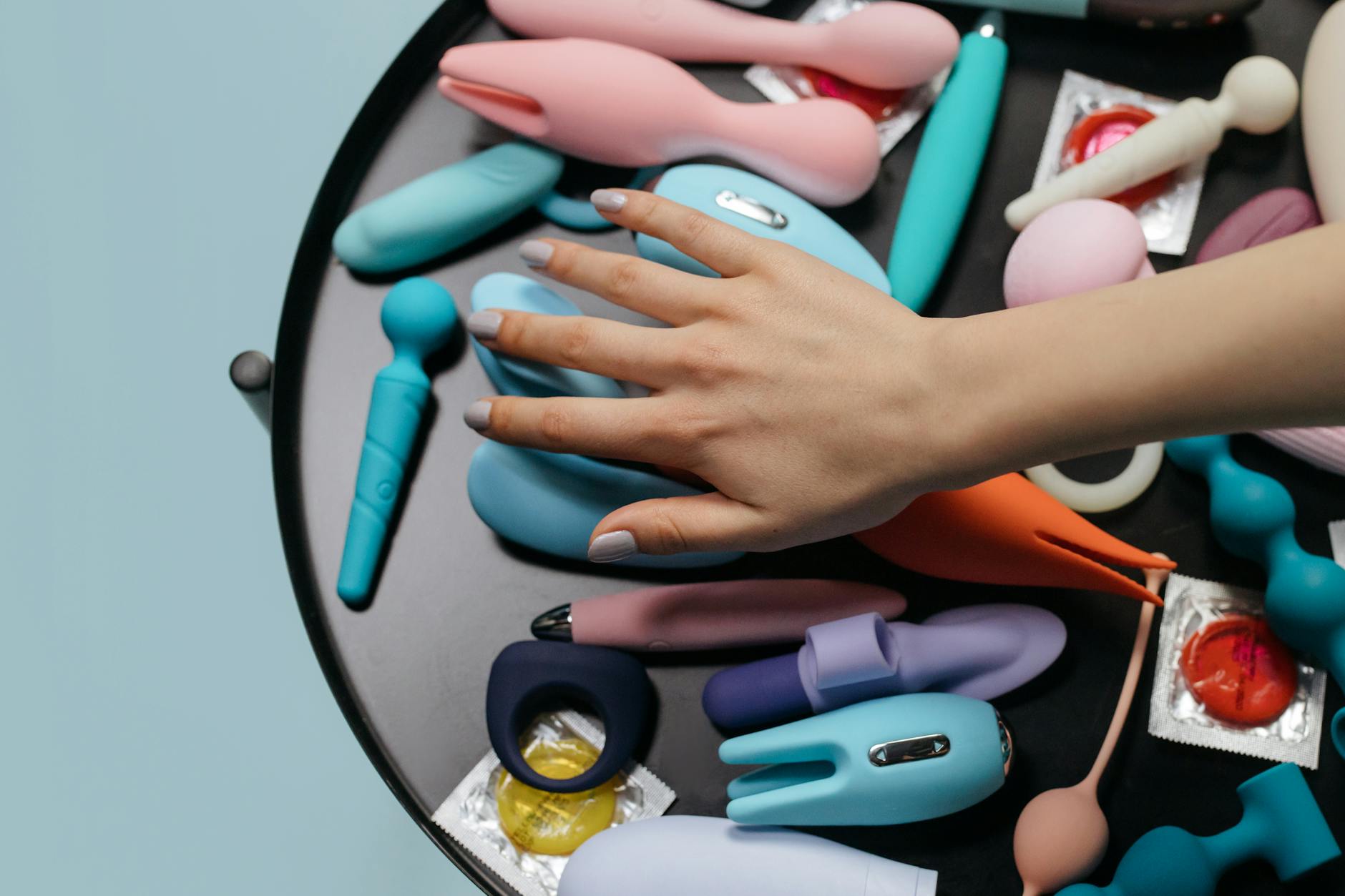
Photo by cottonbro studio on Pexels
FAQ: Cycles and lemon clitoral vibrators
How do I know if my unpredictability is cycle-related or something else?
Track for at least two full cycles. Write down your sensitivity, arousal speed, and what felt good. If you see the same pattern repeat in both cycles, it's almost certainly hormonal. If it's random every time, or if it gets dramatically worse, that's worth flagging to a doctor. Sometimes thyroid issues, medication side effects, or relationship stress masquerade as cycle unpredictability.
Can I use my lemon vibrator during my period?
Yes, if your body wants it. Some people find that orgasms during menstruation feel amazing and help with cramping. Others find any stimulation uncomfortable. The clitoris doesn't care that you're bleeding. What matters is whether you actually want it. Start at lower settings and check in with yourself. If it feels good, keep going. If not, there's no rule saying you have to.
What if I'm on hormonal birth control? Does my cycle still matter?
Yes, but differently. Hormonal contraception suppresses your natural cycle, but you still get variations across the pack. Some pills have a hormone-free week that mimics menstruation. Others maintain more consistent hormone levels. Track anyway. You'll often find smaller fluctuations, but they're still there. And understanding them helps you anticipate what your body needs.
Is it normal for my clitoris to feel totally numb sometimes?
It depends on when. If it's the week before your period and you're sensitive everywhere, that can be normal. Progesterone is high, and your nervous system is less reactive. But if it's random or keeps happening outside your pattern, check with a doctor. Could be vascular, could be neurological, could be a medication side effect. Don't assume it's just your cycle.
Why does suction feel different than vibration across my cycle?
Because your tissue is literally different. When estrogen is high, your vulvar tissue is plumper and more blood-rich. Suction toys like lemon vibrators work beautifully because there's more tissue to engage with. When estrogen dips, your tissue thins slightly. Vibration can feel sharper or more direct. You're not imagining the difference. Your body really is showing up differently.
Can tracking my cycle improve my orgasms with a partner?
Absolutely. If your partner knows your cycle pattern, they can adjust foreplay timing and intensity without having to guess. Instead of a 5-minute warm-up that only works half the time, you might plan 20 minutes during your luteal phase. Instead of assuming you always need the same thing, you can say "I'm ovulating, and everything is sensitive right now." That specificity transforms sex from a guessing game into something way more reliable.
Your body is smarter than static advice
The lemon vibrators you own, or the clitoral vibrators in general, aren't the problem when your body feels unpredictable. The problem is usually that you're trying to use them the same way every single day, on a body that's doing something different every single day.
Map your cycle. Adjust your settings. Notice when suction feels right and when it doesn't. Give your clitoris longer warm-up some weeks and shorter ones others. Your body will thank you with more reliable, more intense pleasure.
That's not high-maintenance. That's just paying attention.
Sources and further reading
Gottman Institute. (2022). "The Science of Healthy Relationships: What Research Tells Us About Couples." Research on emotional attunement and relationship synchrony.
McCool, M. E., Goldstein, A. T., & Goldstein, S. W. (2016). "Pelvic pain, vulvodynia, and related conditions: challenges and advances." Journal of Women's Health, 25(8), 781-788.
Neufeld, G., & Mate, K. (2013). Hold On to Your Kids: Why Parents Matter. Ballantine Books. (On attunement and tracking patterns in relationships.)
Rosewarne, H., & Waling, A. (2018). "Pleasure and Politics: Sexuality, Agency, and Feminist Theory." Australian Feminist Studies, 33(97), 145-159. On embodied knowledge and sexual agency across cycles.