The thing no one tells you about partnered sex and sensation
You're having sex with someone you love. Everything should feel amazing. But somewhere along the way, the touch that used to make you gasp now feels like background noise. Your partner isn't doing anything wrong. Your clitoris hasn't stopped working. What's actually happening is a lot more fixable than you think.
Let's start with what's real: clitoral sensitivity during partnered sex absolutely can shift, and it's not a character flaw or a sign your body has betrayed you. It's usually a combination of three factors working together. Understanding them is the first step to getting the sensation back.
Why sensitivity drops during partnered sex
Honestly, it's rarely one thing. Usually it's a few things stacking on top of each other.
Attention is split. When you're with a partner, your brain is juggling multiple inputs at once. Are they comfortable? Am I lasting long enough? Do they like this? That cognitive load eats directly into the bandwidth available for sensation. Your clitoris isn't less sensitive. Your brain is just less focused on it.
Direct touch stops being enough. Many people discover that the exact same stroke or pressure their clitoris loved alone feels almost neutral during partnered sex. This often happens because partnered stimulation tends to be lighter, more indirect, or at a different angle than self-stimulation. Your nervous system adapts to the stronger signal when you're in control, then struggles to register a gentler one when you're not.
Arousal architecture is different. When you're alone, you can build arousal exactly how your nervous system prefers. With a partner, there's negotiation. You might be at a 6 out of 10 arousal, but your partner is at a 9, so you start having sex before your clitoris is fully engorged and receptive. A less-engorged clitoris genuinely is less sensitive. This isn't dysfunction. It's just the order of operations getting out of sync.
Hormonal cycles matter more than you'd think. If you menstruate, the thickness and sensitivity of your clitoral tissue shifts across your cycle. In the follicular phase (after your period), tissues are often more robust and sensitive. In the luteal phase (before your period), everything gets a bit duller. Many people never connect the dots until they start charting sex alongside their cycle.
What clitoral suction actually does (and why it's different from direct pressure)
Here's the part that changes everything: clitoral suction toys like the Lem work on a completely different principle than fingers, tongues, or vibrators with direct contact.
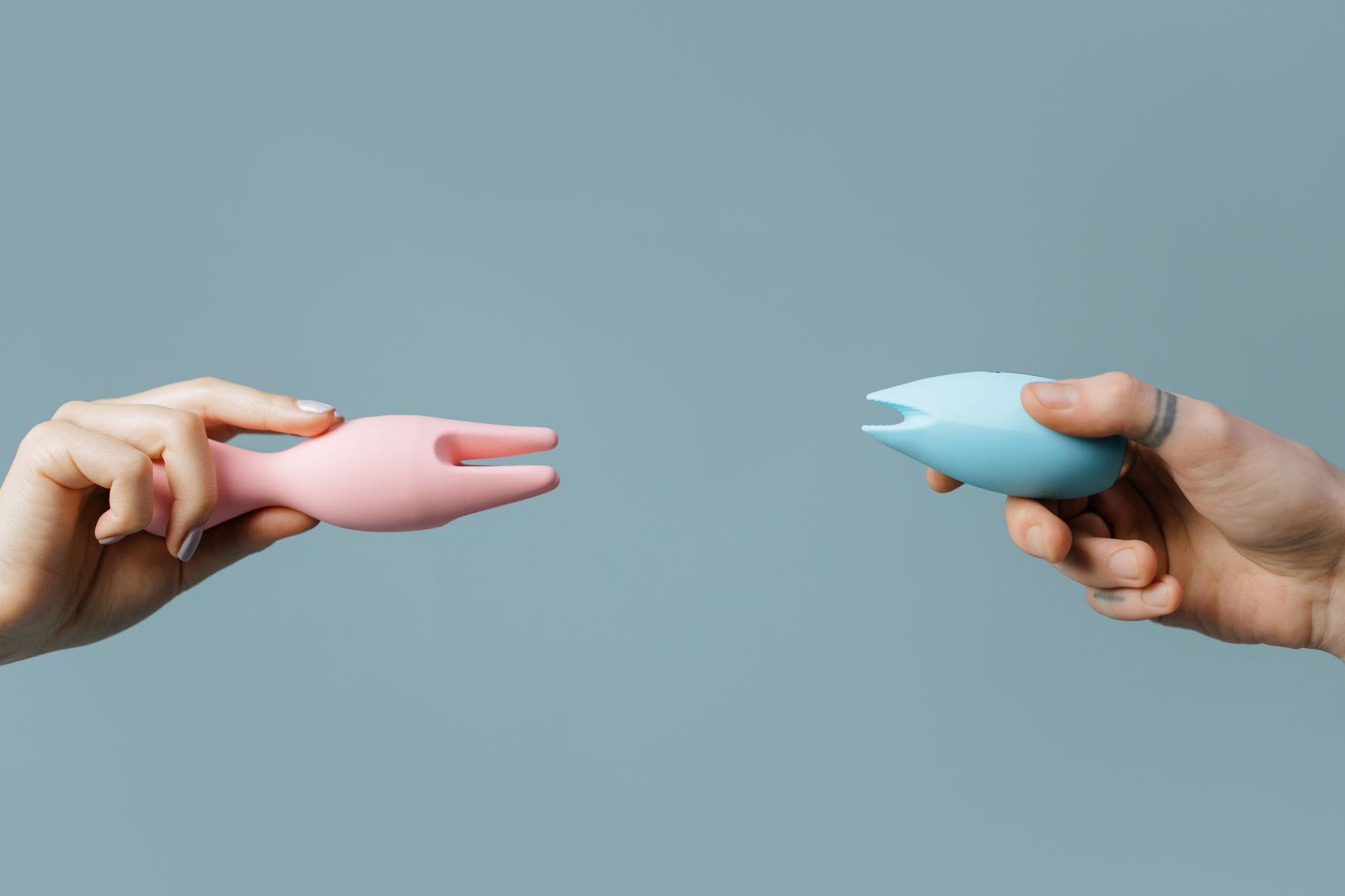
When you use your hand or a partner's touch on your clitoris, you're applying pressure and friction. When you use a lemon clitoral vibrator with suction technology, you're creating a gentle vacuum that pulls blood into the tissue, engorges it, and stimulates the nerve endings with a pulling sensation instead of a rubbing one.
This matters because your clitoris has about 8,000 nerve endings, and they're distributed differently than you'd expect. Many of them respond better to suction and rhythmic pulling than to direct pressure. For people whose clitoral sensitivity has dropped during partnered sex, this shift in stimulation type often wakes up sensations that direct touch alone can't reach.
It's not that your clitoris has become less sensitive. It's that it needs a different kind of signal to feel activated. The Lem delivers that signal.
How to integrate a lemon vibrator into partnered sex
There's a practical question hiding here: how do you actually use a toy during sex with someone without it feeling weird or disruptive?
The answer is slower than you think, and more collaborative.
Start with a conversation outside of sex. Don't introduce a toy mid-session for the first time. Talk about it beforehand. "I've noticed my clitoris doesn't light up the way it used to during sex, and I want to try something. I found this clitoral suction toy called the Lem, and I think it might help us both feel more connected." That's the honest version. Your partner probably already knows something's shifted. Naming it removes the shame.
Warm up first. Spend 10-15 minutes on partnered foreplay without the toy. Your clitoris needs to be partially engorged before the suction toy works well. This isn't wasted time. This is essential setup.
Use the Lem before penetration, not during. Bring yourself close to orgasm with the toy while your partner is inside you or stimulating you manually. This doubles the sensation input to your nervous system. When you're close, your partner can slow down, and you finish with the toy. Or, bring yourself to the edge with the toy, then transition to partnered sex.
Experiment with pressure and pattern. The Lem has different intensity levels. Many people find that starting at level 2 or 3 feels less jarring than jumping straight to level 4 or 5. Your partner can hold the toy while you guide them, or you can use it yourself while they focus on penetration or manual stimulation elsewhere on your body.
Notice what actually works. After you've tried it a few times, pay attention to what combination of inputs makes you feel most alive. Is it clitoral suction plus penetration? Is it suction plus your partner's hands on you elsewhere? Is it one session alone with the Lem first, then sex? Everyone's nervous system is wired differently. The goal is to find the combo that brings your clitoris back online.
The emotional shift that happens when sensation returns
Here's something I see all the time in my practice: when sensation comes back, so does desire. And when desire comes back, couples suddenly reconnect in ways that have nothing to do with the toy itself.
For years, maybe, you've been having sex that felt okay but not transcendent. Your partner noticed you weren't as vocal, wasn't as present. Maybe they interpreted that as a loss of attraction. Maybe you did. But what was actually happening was your nervous system telling the truth: this particular input isn't getting through.
The moment you use a tool that actually does get through, everything shifts. You remember what pleasure feels like. Your partner gets to witness that. The feedback loop resets. Suddenly you're both wanting sex again, not just doing it.
Using a lemon clitoral vibrator during partnered sex isn't about the toy. It's about reclaiming the signal so you can feel again.
I always tell couples this: a good sex toy is a communication device. It says, "Here's what my body actually needs." When your partner understands that, they stop taking the sensitivity shift personally. They start seeing it as useful information, not a rejection.
When to use the Lem and when to skip it
You don't need the toy every time. In fact, using it every single time can sometimes reinforce the idea that direct touch isn't enough, which then makes you anxious about partnered sex without it.
Use the Lem when you want to feel genuinely orgasmic. Use it when you want to remember what your clitoris feels like at full volume. Use it when you've been having mediocre sex and you need a reset.
But also build in sessions without it. Once your nervous system has remembered what full arousal feels like, sometimes direct touch alone can access that again. Your clitoris has learned the pathway back.
The best approach I've seen is: use the toy 2-3 times a week for a month, then mix sessions with and without. You're retraining your nervous system, not replacing your partner.
How your partner can help (without the toy)
If you're not using the Lem in a given session, there are small things that dramatically improve clitoral sensitivity during partnered sex.
Make arousal building longer. Instead of 10 minutes of foreplay, take 20. Your clitoris needs time to fully engorge. That takes more time than you probably think.
Ask for feedback. "What feels good right now?" isn't awkward if you frame it as curiosity, not criticism. It gives your partner permission to adjust, and it keeps both of you tuned in.
Vary the angle. If your partner's going straight into missionary, your clitoris might be getting indirect or no friction. Side-by-side positions, positions where your clitoris gets direct contact, or positions where you can use your hand while they penetrate all change what your clitoris actually receives.
Remember that lubrication isn't optional. When clitoral sensitivity is lower, friction can feel uncomfortable instead of pleasurable. More lube almost always helps.
These aren't complicated. But they work because they're solving the actual problem: your clitoris isn't less sensitive. It just needs better conditions to show up fully.
When to check in with a provider
Most clitoral sensitivity shifts during partnered sex are fixable with the strategies above. But sometimes there's a medical layer worth exploring.
If your sensitivity has dropped suddenly and severely, or if you're also experiencing pain during sex, talk to a gynecologist. Conditions like clitoral sensation changes after hormonal shifts or pelvic floor tension can genuinely affect how your clitoris registers sensation.
If sensitivity is fine when you're alone but completely absent during partnered sex, the issue is almost certainly psychological or relational. That's where working with a sex therapist or relationship coach (like me) becomes invaluable. We can help you figure out whether it's attention, anxiety, or something in the dynamic that's muting the signal.
Neither of these conversations means anything is wrong with you. It means you're taking your pleasure seriously enough to investigate.
FAQs
Can using a lemon vibrator make partnered sex feel less satisfying?
Not if you're using it strategically. The goal isn't to make your partner's touch feel less important. It's to remind your nervous system what full arousal feels like, so direct touch can reach you again. Many couples find that after a month of regular use with the Lem, direct partnered stimulation alone starts feeling better than it did before.
How do I talk to my partner about reduced clitoral sensitivity without hurting their feelings?
Frame it as your body's feedback, not their failure. "My clitoris isn't waking up the way it used to, and I think it's because we're rushing or because I need a different kind of stimulation." Avoid anything that sounds like "you're not touching me right." Make it "my nervous system needs this adjustment." Good partners want to know what works. They don't take it personally.
Is clitoral numbness during sex a sign the relationship is failing?
Absolutely not. It's usually a sign that the conditions are off. Slow down, pay more attention, use a tool that helps your clitoris feel engaged. Most couples find that sensitivity returns when arousal gets prioritized again.
How long does it take for clitoral sensation to come back?
Most people notice significant improvement within 2-4 weeks of regular use. Some feel it within days. The Lem essentially retrains your nervous system to recognize and respond to stimulation. Your clitoris hasn't lost capacity. It just needed the right signal.
Can I use a lemon clitoral vibrator if I have a partner who's sensitive about toys?
Yes, but the conversation matters. Lead with the fact that this is about you reconnecting with your own pleasure, not about him being inadequate. Many partners actually find it a relief to understand what their partner needs, rather than guessing. If someone consistently refuses to engage with anything that helps you feel pleasure, that's a different problem.
Does clitoral sensitivity ever fully return to what it was before?
Often, yes. And sometimes it doesn't, but it returns to something better. Many people report that after retraining their nervous system with a tool like the Lem, their clitoris actually becomes more responsive and easier to arouse than it was in earlier relationships. You're not trying to go backward. You're learning what your body can do now.
What comes next
Clitoral sensitivity during partnered sex isn't destiny. It's not a permanent loss. It's usually a signal that something needs to shift, and most of the time that shift is simple: better arousal, different stimulation, or a tool that helps your nervous system recognize the signal.
The Lem exists for exactly this moment. It's not a replacement for your partner. It's an amplifier. It says, "Here's what my body actually needs," and gives both of you a shared language for reconnection.
If you want to explore how partnered sex can feel alive again, we can talk. Reach out anytime at /contact.