How to Use Lemon Vibrators When You're Rebuilding Confidence After Body Changes
Body changes happen. Pregnancy, weight shifts, surgery, aging, illness, hormonal treatment, recovery from trauma. Your body is different now, and sometimes that difference feels like a barrier to pleasure instead of just a fact. Let's talk about what that means and why lemon vibrators are often the gentlest way back in.
The confidence problem isn't really about your body
Here's what I see in my office: someone comes in months or years after a body change, convinced that their pleasure is gone because their body is wrong. But that's almost never what's actually happening. What's happening is this: you've lost the map.
Your nervous system knew exactly how to respond when things felt a certain way. Now they don't feel that way. So arousal feels slower, or different, or localized somewhere unexpected. And instead of treating that as new information to explore, you interpret it as broken. You're not broken. You're just disoriented.
The confidence issue is often just grief that you're carrying in your body. And that grief absolutely affects arousal. Arousal is the first thing that disappears when your nervous system is busy processing loss. So before we talk about tools, we need to talk about permission.
Permission first, tools second
You don't need a lemon vibrator to be allowed to feel good. But you might need one to give yourself permission to try.
This is real: when your relationship to your own body is shaky, a toy can feel like a gift from someone else (even if it's just you buying it for yourself). It's not you being selfish or desperate. It's a small external permission slip that your brain apparently needs right now. And that permission often releases something in your nervous system that shame and doubt have been blocking.
If you haven't used a toy before, that first step feels enormous. A lemon vibrator, or any clitoral vibrator, is genuinely the easiest entry point because it's external, it's straightforward, and you can't do it wrong. You also aren't bringing penetration anxiety into the mix while you're already rebuilding.

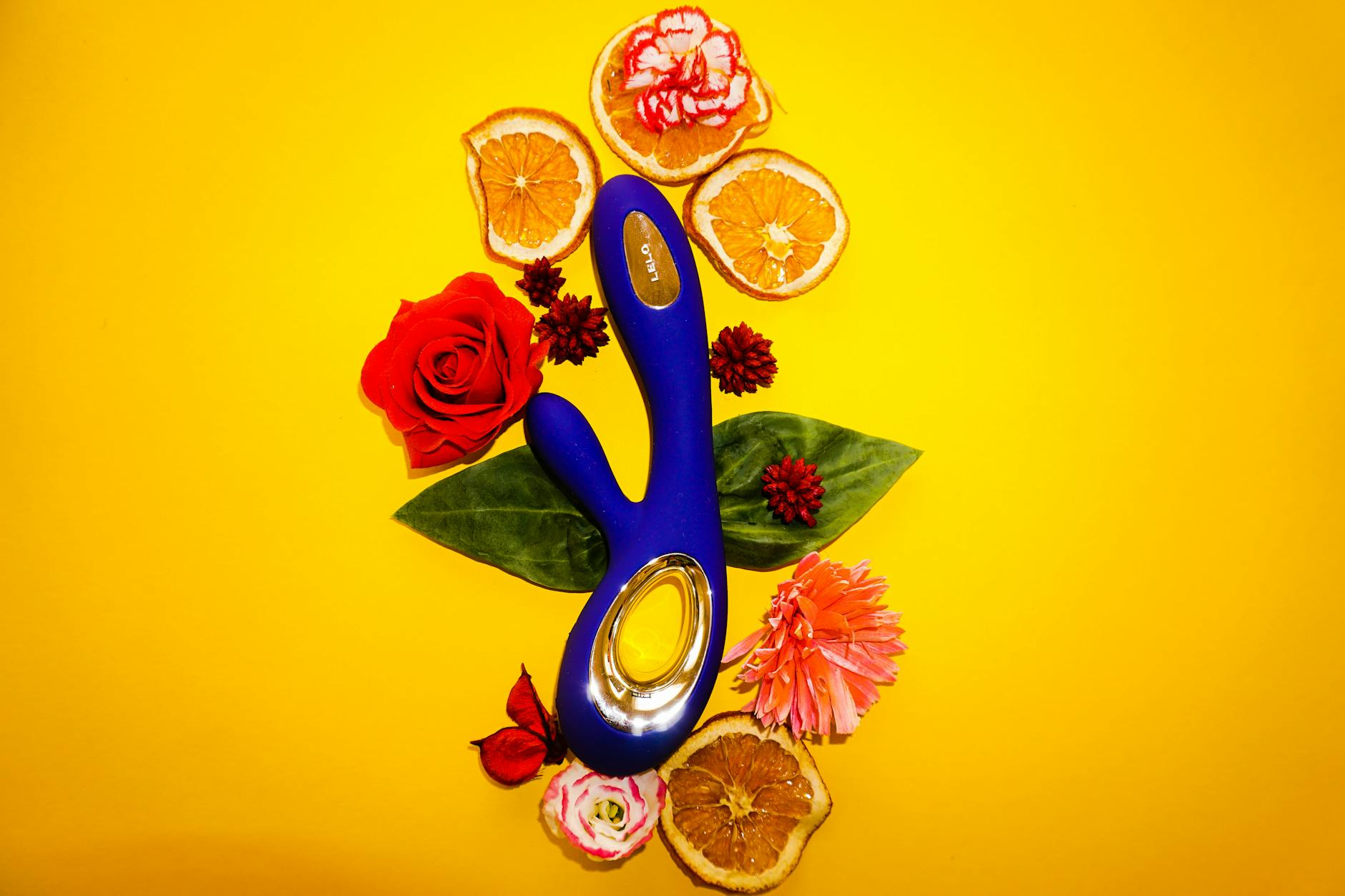
Photo by cottonbro studio on Pexels
Body changes and sensation: what's actually different
When your body changes, sensation often changes with it. Not because you're broken, but because sensation is mapped to your nervous system, and your nervous system has been paying attention to what's happening.
If you've been avoiding your body because of discomfort or shame, your clitoris and surrounding tissue are less enervated. Blood flow decreases. The nerve endings that fire arousal signals get quieter. This is reversible, but it takes consistent, gentle attention. Not forcing yourself to feel something you don't feel yet.
If your body change involved surgery or trauma, scar tissue or altered sensation might be part of it now. That's real and deserves respect. A lem vibrator applies pressure differently than your hand or a partner would. The suction action (unique to these designs) reaches deeper neural pathways without requiring intense friction on surface tissue. That changes everything for people rebuilding sensation after trauma or surgery.
If your body change was hormonal (post-pregnancy, perimenopause, hormone therapy), tissue thickness and lubrication shift. Your arousal ramp might be slower. This is also reversible, and water-based lubricant plus a vibrator designed for gentle sensation exploration is how most people restart.
Starting again when it feels awkward
Let's be honest: if you haven't touched yourself in a year, two years, five years, the first time back feels weird. Your hand feels weird on your own body. Your responses feel sluggish. You might not even have an orgasm, or it might feel completely different from what you remember. All of that is normal and expected.
This is why a lemon clitoral vibrator is such a useful reset tool. It removes the performance pressure of "am I doing this right". You're not doing anything. You're receiving sensation. That's a different instruction set for your nervous system. It signals: this is about discovery, not execution. Your only job is to notice what you notice.
Start at the lowest setting. This is not the time to chase intensity. You're teaching your nervous system that this is safe, that your body is allowed to feel good, and that you're willing to be curious about what happens. Intensity can wait six months. Reconnection can't.
Why lemon suction vibrators work for rebuilding
Most clitoral vibrators work through vibration. They buzz. Lemon vibrators work through suction. The lem design creates a gentle vacuum effect that simulates oral stimulation without the physical pressure. This matters for people rebuilding confidence because suction reaches deeper into the clitoral structure without triggering surface sensitivity. If your body has been avoiding sensation, that gentleness is load-bearing.
The suction also creates a different kind of feedback loop. Vibration can feel external and slightly numb. Suction feels like something is happening to you, which sounds small but neurologically changes arousal for people who have been dissociated from their own bodies.
If you're starting with a lemon vibrator and you've lost confidence in your body, start with the lowest suction pattern. Spend three to five minutes just observing what happens. No pressure to orgasm. No pressure to feel anything specific. Your nervous system is basically rebooting, and rebooting takes time.
The role of a partner in rebuilding
If you're doing this with a partner, here's what I tell couples: this is not the moment to make it collaborative. This is the moment to make it solo.
That feels counterintuitive if you're rebuilding because something in the relationship shifted. But separating the solo-pleasure work from the partnered-pleasure work is what actually lets both happen. If your partner is watching or waiting for you to orgasm with them, your nervous system stays in performance mode. You don't drop into exploration.
Most couples I work with rebuild confidence fastest when one person spends two to four weeks exploring alone with a lemon vibrator, building that internal permission structure and reconnecting with sensation on their own terms. Then they bring that experience back to partnered pleasure, and it's completely different. The person doing the solo work has already answered "will my body work". Now they can ask "what do we both want."
If your partner is supportive and curious, you can talk about this. You can even use it in the room together without it becoming about them. But the most important thing is that you're not performing for anyone. You're learning your own body again.
The waiting period: when orgasm takes longer to come back
Sometimes, after body changes, orgasm just takes longer. Not because anything is wrong, but because your nervous system has been handling grief or pain or dysphoria, and it's less practiced at dropping into pleasure. This is wildly common and usually temporary.
If you're using a lemon vibrator and you're not coming, that's information, not failure. It means your nervous system needs more time or more of something else. More rest. More therapy. More permission. More lube. Different pressure. A different time of day. These are solvable problems, not verdicts on your body.
Most people find that after three to five sessions of consistent exploration with gentle tools, something starts to shift. Blood flow increases. Sensation clarifies. Arousal builds faster. The waiting period ends. But you have to stay in it long enough to get there. One session doesn't prove anything.
What changes when you rebuild alongside other supports
If your body changed because of something that also affected your mental health, pleasure often returns fastest when you're doing multiple things at once. A lem vibrator plus talk therapy plus maybe hormone support or physical therapy plus sleep and movement. Pleasure isn't independent of the rest of your life. It's downstream of how safe your nervous system feels.
I've seen people rebuild confidence in weeks when they're also doing body-informed therapy, or pelvic floor physical therapy, or hormone support. I've seen it take longer when someone is using a vibrator but still avoiding their body in other ways. Your nervous system knows. It's keeping score.
If you're starting to explore with a lemon vibrator and nothing is happening after several sessions, that's the time to check in with what else might need attention. Not because the vibrator is wrong, but because pleasure is the last thing your nervous system lights up when something else is consuming its resources.
FAQ: Questions people actually ask when rebuilding
Is it normal to feel nothing the first time I use a lemon vibrator after body changes?
Completely normal. Your nervous system has been busy with other things. Numbness or flatness at first doesn't mean anything is broken. It usually means you need more sessions, lower intensity, more lube, or maybe all three. Some people need five to ten sessions before anything registers as pleasure. That's the standard, not the exception.
Can I use a lemon clitoral vibrator if I've never had an orgasm, even before my body changed?
Yes. A lemon vibrator is actually one of the gentlest ways to start. No penetration, no guesswork, just external sensation at whatever intensity you choose. You're not starting from broken. You're starting from curious. That's different.
What if my partner wants to help me rebuild but I feel self-conscious?
This is so common it should be renamed. The paradox is that you'll usually rebuild faster alone first, then bring your partner in once you've already answered the question "will my body work." But if you want them present, focus on them being present without performing. They can be in the room reading while you explore. That's enough. It's not about them watching you get off. It's about them being comfortable with your pleasure existing, even if they're not directly involved.
How long until confidence comes back?
That varies wildly. Some people feel the shift in two weeks. Some take three months. Most of it depends on what else is going on (sleep, stress, other body work, relationship dynamics, grief processing). A lemon vibrator usually accelerates the timeline, but it's not a magic fix. It's a tool that your nervous system uses when it's ready.
Does using a toy alone mean my partner isn't enough?
No. This is important: using a toy is not a referendum on your partner or your relationship. It's a way to reconnect with yourself. Some people come back to partnered pleasure feeling more confident and more able to ask for what they want. That usually makes things better, not worse.
What if I've had surgical changes and I'm worried about safety?
Always run it by your doctor, especially if it's recent surgery or if there's scar tissue involved. Most people can use external vibrators pretty safely after recovery, but your surgeon knows your situation better than I do. Once you get the green light, lemon vibrators are exceptionally gentle because of the suction mechanism. Start low, go slow, use lube, and listen to your body.
Coming back to your body is not linear
You're rebuilding confidence in a body that's different now. That's grief work, and it's pleasure work, and it's nervous system work all at the same time. Some days you'll feel reconnected. Some days you'll feel completely dissociated again. Both are normal. You're not starting over when that happens. You're just processing.
A lemon vibrator is a tool for that process. Not the only tool, and not a magic fix. But a surprisingly effective way to tell your nervous system: I'm choosing pleasure anyway. I'm choosing to be curious about my body anyway. I'm choosing to believe it still works, even though everything has changed.
That's confidence rebuilding in its truest form. And it often starts with the lowest setting on a lemon vibrator, five minutes alone, and nothing but permission.