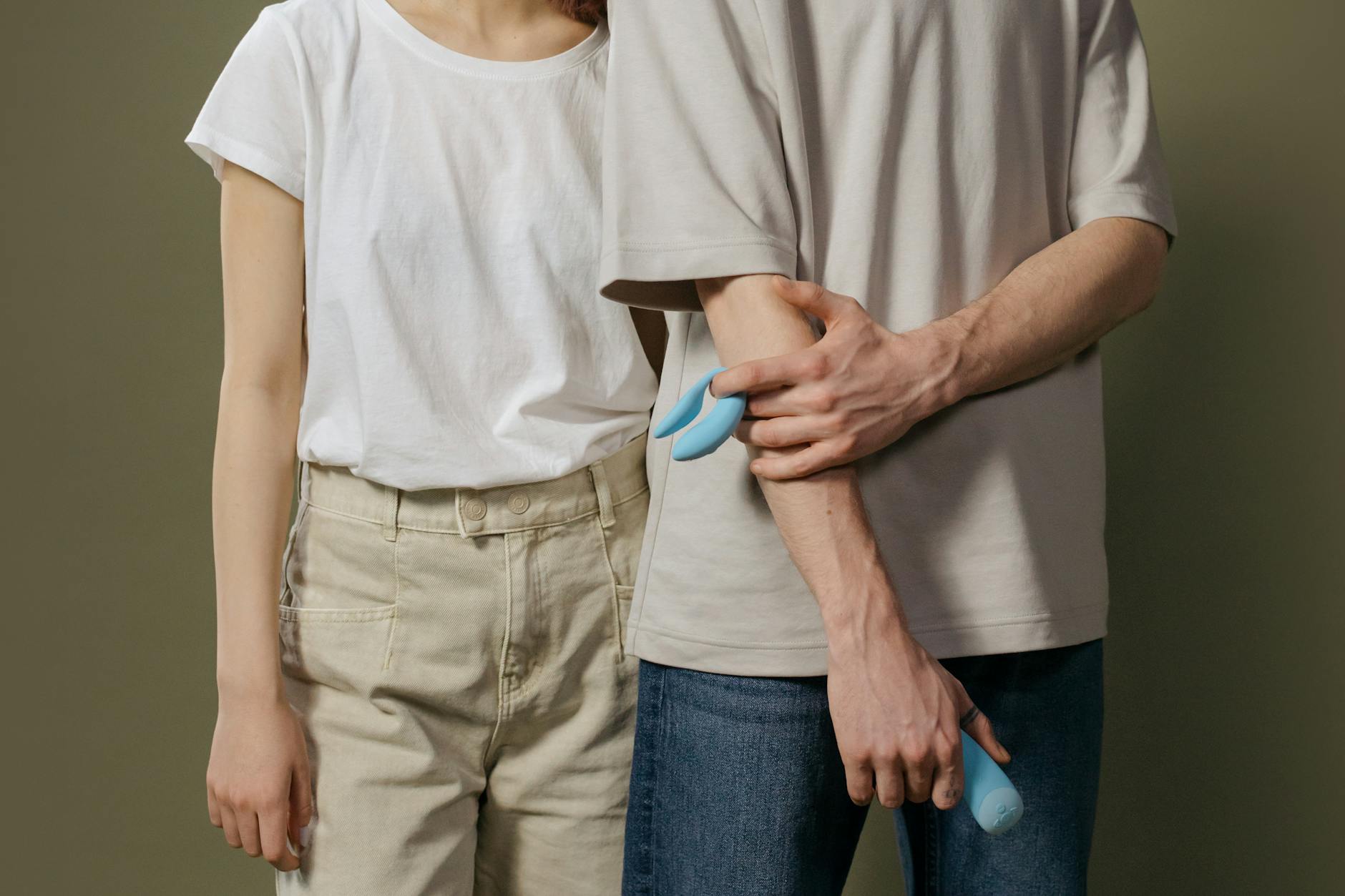
How Lemon Vibrator Intensity Changes When Moving In Together
Your pleasure doesn't disappear when you share a bedroom. It just shifts. Here's why your lemon clitoral vibrator feels different now, and how to adapt.
Moving in together is the relationship equivalent of turning the volume up on everything. More time together. More proximity. More visibility into each other's habits, including sexual ones. And yes, this changes how your body and mind approach pleasure, including how you use tools like a lemon vibrator.
The change isn't failure. It's not even loss. It's recalibration. And understanding it means the difference between thinking something's wrong with you and knowing exactly what's actually happening.
When you had separate homes, pleasure was compartmentalized. You could close a door, lock it, create a contained environment where only your pleasure mattered. Your brain knew the script. Privacy meant safety meant arousal.
Cohabitation collapses that. Shared walls, shared routines, shared awareness of each other's presence. Your nervous system has to renegotiate what privacy actually means. This isn't about your partner interrupting you. It's about the ambient psychological shift of knowing someone's in the next room, that they might hear you, that your pleasure is no longer completely yours alone.
For some people, this unlocks new intensity. Excitement can live in that exposure. For others, it tanks arousal completely. Both are neurologically normal. Your brain is processing legitimate threat assessment, even if the threat is just "my partner exists nearby."
Three things shift simultaneously when you move in together:
Routine becomes visibility. When you used your lemon clitoral vibrator alone, the when and how were invisible to your partner. Now, patterns become apparent. Maybe you always used it Thursday nights. Maybe your partner learns the exact sounds your device makes. This visibility can feel vulnerable in ways that either heighten arousal or suppress it entirely.
Arousal competes for brain space. Cohabitation means mental load. Shared calendar, shared groceries, shared temperature preferences, shared decisions about whose family visits when. Your brain is fuller. Desire requires mental real estate, and when you're managing logistics with someone, that real estate shrinks. This isn't a passion problem. It's a cognitive load problem.
Permission transforms. Living with a partner often feels like losing permission to prioritize your solo pleasure. Couples sometimes slip into an unspoken rule that all sexual experience should be partnered. Your lemon vibrator starts to feel like a parallel activity instead of a valued part of your sexuality. The shame isn't always stated. It's osmotic.
When you live with someone, several physical things change:
Your stress baseline often drops (you're not managing the logistics of two households anymore) but your ambient cortisol might increase (more interpersonal dynamics, more conflict potential). Both of these affect arousal. Lower stress is good for desire. Higher interpersonal tension is terrible for it.
Your dopamine response to novelty changes. Early-relationship novelty naturally wears off. The brain stops flooding your system with reward chemicals just because you're near your partner. This is normal pair-bonding. But it often coincides with a noticeable drop in orgasm intensity or frequency, which feels like failure when it's actually just chemistry settling.
Your pelvic floor tension often increases slightly. Why. Shared space means less total relaxation, even during sleep. Your nervous system stays fractionally more activated because there's another person in your physical space. A tighter pelvic floor changes how suction-based tools like lemon vibrators feel. You might need lower settings or longer warm-up time. This isn't weakness. It's just the body responding to slightly elevated background activation.
Separate pleasure from partnered sex mentally. If you're thinking of your lemon clitoral vibrator as something you do when your partner isn't interested, it becomes a placeholder. Instead, frame it as a separate sexual practice entirely. You have solo sexuality and partnered sexuality. They're different conversations. Both are valid. Both deserve attention.
Find actual privacy, not assumed permission. "I'm going to use my vibrator now" and then closing a door is different from hiding it. Explicit permission (even if it's just you stating your intention) settles your nervous system. You're not stealing something. You're practicing your sexuality.
Start lower on the intensity scale. If you used to jump to setting 5 on your lemon vibrator, try starting at setting 2 or 3 for a few weeks. Cohabitation often means your nervous system needs gentler on-ramps to arousal. This isn't permanent. You're just meeting your current baseline where it actually is, not where you wish it was.
Budget real warm-up time. When arousal had a shorter runway, you could go from 0 to orgasm in minutes. Cohabitation usually means arousal needs 15 to 25 minutes of sustained attention before your body fully softens into pleasure. This feels slow. It's not. It's just your nervous system being more cautious about what it permits.
Check your pelvic floor temperature. Literally. Do Kegel contractions feel tighter than they used to. If yes, you're holding tension. Spend a week doing pelvic floor relaxation (the opposite of Kegels) before returning to your usual intensity. Tight tissue makes suction-based toys feel more intense, which can actually become uncomfortable.
Here's where most couples miss the obvious. They assume pleasure is a partnered-only thing now, or they assume the other person doesn't care about solo sexuality. Neither is usually true.
Tell your partner: my pleasure is changing because we're living together, and I'm figuring out how to adapt. That's it. You're not asking permission. You're not confessing to something. You're describing a normal adjustment.
If your partner gets weird about it, that's separate information. That's about their insecurity or beliefs about sexuality, not about your lemon vibrator. Don't let their discomfort become your problem to solve.
Many couples find that explicitly validating each other's solo sexuality actually strengthens partnered sex. Why. Because you're not treating each other as the sole source of pleasure. That removes pressure. Pressure kills arousal. Remove it, and everything else works better.
This matters because the narrative is usually about loss. But for a lot of people, moving in together creates the foundation for deeper pleasure.
When the early-stage anxiety settles (am I safe, are they staying, do they actually like me), a different kind of arousal becomes possible. It's slower to build. It's less dramatic. But it often feels richer because it's rooted in actual trust instead of novelty and adrenaline.
Your lemon clitoral vibrator might not feel exciting in the same way. It might feel more integrated. More steady. Like a tool that serves you instead of compensates for what you're missing.
Cohabitation isn't the end of pleasure. It's a different chapter. What you get back, if you're patient, often surprises you.
No, but the adjustment period usually lasts 2 to 6 months. Your nervous system recalibrates around the new proximity. After that, intensity typically restabilizes, though it often feels different in character. Less novelty-driven, more grounded. If intensity doesn't return after 6 months, that usually points to relationship tension, not the cohabitation itself.
Not unless you want to. Hiding it usually comes from shame, and shame is the actual arousal killer. If you're not ready to mention it, that's fine. But actively concealing it often creates low-level stress that tanks your ability to reach orgasm. Neutral visibility (it's just in your nightstand, no big thing) actually helps more than you'd expect.
Sometimes, if you both actually want to. But don't use it as a workaround for the real conversation. Sharing your vibrator doesn't fix underlying insecurity or mismatched sexual expectations. What it can do is demystify it for your partner and lower the weirdness factor. Just make sure it's something you actually want to do, not something you're doing to keep the peace.
Three reasons, usually in combination. Your nervous system is processing new stimuli and background activation. Your mental load increases. The dopamine novelty of early-stage dating naturally wears off. None of these are permanent. But they all affect arousal and orgasm quality temporarily.
Completely normal. Cohabitation is a lot of togetherness. Solo pleasure can feel like necessary solitude. The desire for it isn't about your partner being insufficient. It's about needing a space where you don't have to negotiate or perform. Honor that need instead of fighting it.
Treat it the same way you'd mention needing alone time to read or exercise. Neutral, brief, matter-of-fact. "I use my vibrator sometimes. It's a normal part of how I experience pleasure." Most partners land somewhere between "okay, cool" and actually interested. The weirder you make it, the weirder they'll think it is.
Cohabitation changes pleasure not because moving in together is bad, but because your nervous system is processing a legitimate increase in interpersonal stimulus. Understanding that shift means you can work with your body instead of against it. Your lemon vibrator doesn't stop working. You just need to meet it where you actually are, not where you remember being. That's adaptation, not loss.