Desire doesn't vanish—it goes quiet
Depression doesn't erase your capacity for pleasure. It mutes it. For months or years, arousal feels impossible, orgasms seem pointless, and your body stops sending the signals that used to feel automatic. That flatness is real and chemical, not a character flaw.
Then one day—sometimes weeks into medication adjustment, sometimes months into therapy—something shifts. A spark returns. Maybe it's small. Maybe it's confusing. And if you're like most people recovering from depression, you might not know what to do with it.
This guide walks you through that transition. How to recognize the return of desire safely. Why lemon clitoral vibrators are particularly useful during recovery. And how to rebuild that relationship with your body without pressure or performance.
What actually happens when desire returns
The neuroscience here matters. Depression dampens dopamine and serotonin, the chemicals that drive both motivation and pleasure. When medication or therapy or time starts to rebalance those systems, arousal often comes roaring back all at once. You'll go from feeling nothing to suddenly noticing attraction, wanting touch, or getting physically aroused by things that left you cold a month ago.
This return is not subtle. Some people describe it as their body waking up. Others say it feels slightly foreign because they've been without it for so long. Both descriptions are accurate.
Here's the tricky part: that intensity doesn't always match your emotional readiness. Your brain might still be rebuilding confidence and trust in your own body. Your relationship might need to reconnect emotionally before physical reconnection feels safe. Or you might be solo and suddenly curious about pleasure again after months of numbness. The timeline for emotional recovery and physical recovery doesn't always sync.
Why lemon vibrators are ideal during this transition
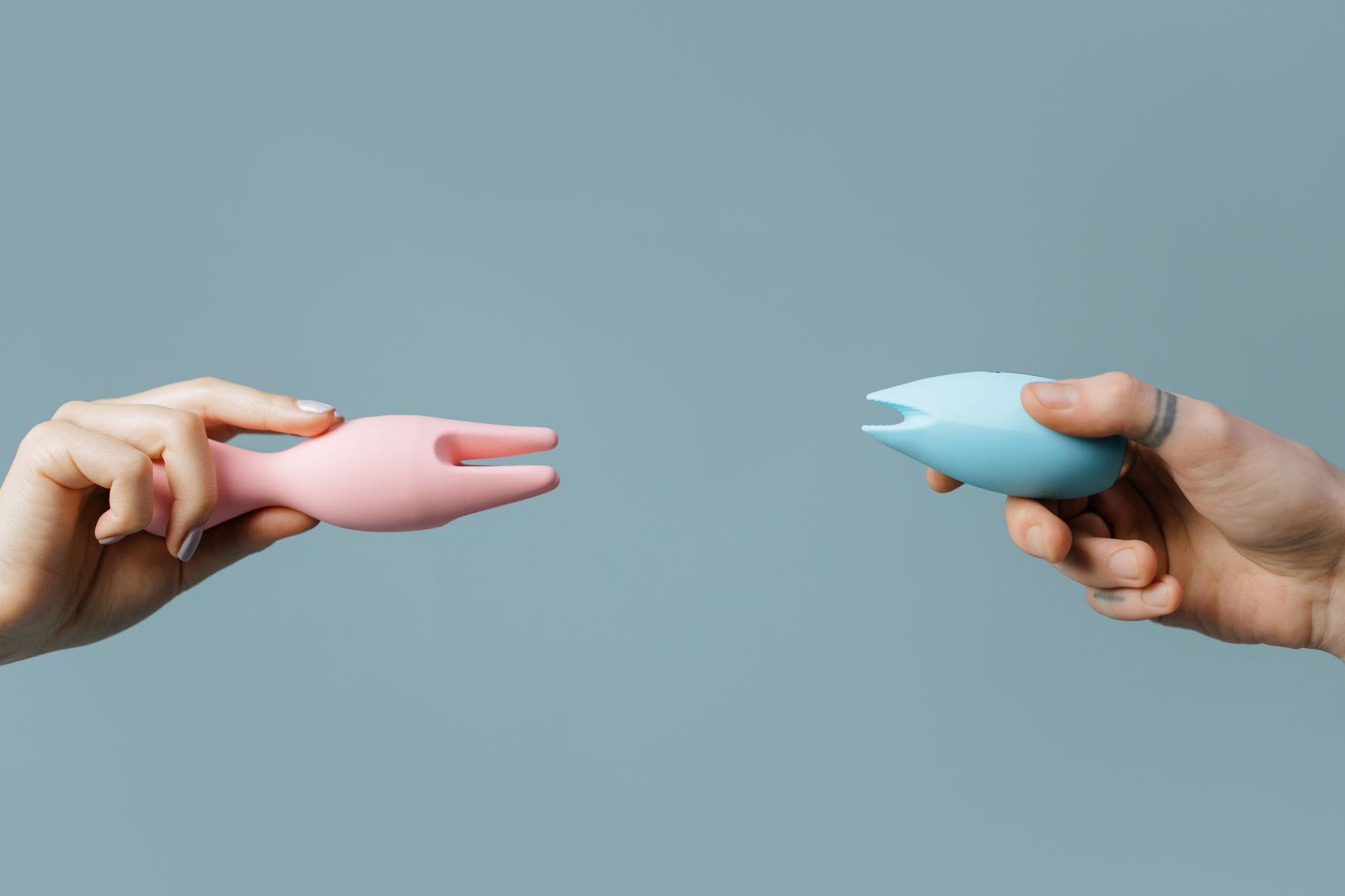
Lemon clitoral vibrators work differently than larger toys or traditional wands. They use gentle air-suction rather than harsh vibration, which matters when you're relearning your own body.
First, the sensation is gentler on tissue that might be sensitive after months of not being touched. You're not reintroducing pleasure to a body that's been ready for it—you're reintroducing pleasure to a nervous system that's been in low-power mode. Lemon vibrators let you control intensity precisely, starting at the softest setting and building from there.
Second, the focused design means you're not overthinking your body's response. You're not navigating a toy that requires flexibility, positioning, or sustained effort. You can use a lemon vibrator lying down, clothed if you want to start that way, for as long or as short as feels right. There's no performance pressure.
Third, the ritual of it—taking time for yourself, creating a small moment that's just for pleasure—rebuilds agency. Depression often corrodes your sense of control. Intentionally choosing to explore pleasure, setting boundaries around that time, and stopping whenever you want reinforces that your body belongs to you.
The first time back—realistic expectations
Let's be honest: your first orgasm after depression might not be fireworks. It might be quiet. It might feel unfamiliar. Your body might take longer to respond than it did before depression. All of that is normal and temporary.
Here's what I recommend:
Set zero expectations. The goal is not an orgasm. The goal is to spend fifteen minutes reconnecting with the sensation of pleasure, without judgment. That's it.
Privacy matters more than you think. Even if you're partnered, that first exploration works best solo. Your nervous system needs safety, not performance observation.
Warm up longer than feels necessary. Give yourself twenty minutes just to breathe, touch your own skin, and notice what feels good before introducing any toy. Depression makes touch feel alien. You're teaching your body that touch is safe again.
Use a lemon vibrator at its gentlest setting first. Start at level one. You can always turn it up. You cannot undo overstimulation mid-session if you've startled your nervous system.
Stop whenever you want to. If it feels strange or too much or boring, that's information, not failure. Your body is still calibrating. Come back tomorrow.
Reconnecting with a partner during recovery
If desire returns while you're in a relationship, your partner might notice before you do. They might initiate. That's when communication becomes critical.
Here's the conversation I recommend: "My body is starting to wake up again, and I want to explore that, but I need to do it at my own pace. That might mean I need solo time with myself first. It doesn't mean I don't want you. It means I need to rebuild trust in my own body before I can relax into partnered touch."
That's not rejection. That's actually the fastest route back to genuine desire with your partner.
When you do reconnect physically, bring the lemon vibrator into the equation early. It removes pressure from your partner to "do it right" and reminds both of you that pleasure is something you're building together, not something one person owes the other.

Photo by cottonbro studio on Pexels
Many couples find that integrating a lemon clitoral vibrator into partnered sex actually deepens connection. You're not replacing intimacy. You're adding a layer that lets you access your own pleasure while staying close.
The medication question
If you're on antidepressants that are also flattening libido (SSRIs are notorious for this), the return of desire might signal that your dose needs adjustment or your medication might need switching. Talk to your prescriber.
But here's what matters: even on medication that dampens desire, the sensation of pleasure is often still accessible. It might take longer to build. It might feel less intense. But it's there. That distinction is important because it means you're not broken, and pleasure-focused exploration—like using a lemon vibrator—can actually help bridge that gap while you and your provider figure out the medication piece.
Some people find that the focused stimulation of a lemon vibrator actually helps break through medication-related numbness. The concentrated air-suction bypasses some of the deadening that affects general tissue sensation.
Watch for patterns—don't just track orgasms
As you rebuild, notice what actually turns you on now. Depression sometimes changes what appeals to you erotically. You might find your fantasies have shifted. Your body might respond to different kinds of touch. That's not damage. That's recalibration.
Keep a simple mental note: What time of day do you feel most awake? When do you feel the most at ease in your body? Do you need to feel safe before arousal can build, or does arousal itself feel safe-inducing? These patterns matter more than orgasm frequency.
When to slow down or seek support
If using a lemon vibrator triggers anxiety, flashbacks, or emotional flooding, that's a signal to pause and talk to a therapist, not to push through. Recovery isn't linear. Pleasure isn't urgent.
If desire returns but feels compulsive or driven by pressure from a partner, that's a different issue. Genuine desire feels like invitation, not obligation. A lemon vibrator should always feel optional, never like a tool to perform.
Most people find that a few weeks of gentle, solo exploration with a lemon clitoral vibrator helps them rebuild confidence. Then partnered pleasure becomes available again naturally, without force.
FAQ
Is it normal for desire to return suddenly after depression?
Completely normal. Depression suppresses dopamine and arousal chemicals. As your brain chemistry rebalances—through medication, therapy, time, or usually all three—those systems can wake up quickly. Some people experience a gradual return. Others describe it as a switch flipping. Both are fine.
Can antidepressants permanently kill my sex drive?
No. Some SSRIs can lower desire as a side effect, but it's not permanent. Working with your prescriber to adjust dose, timing, or medication type usually restores libido. Even on medications that do lower arousal, many people find that pleasure is still accessible with patience and the right approach. A lemon vibrator can help bridge that gap.
Should I tell my partner about using a lemon vibrator during recovery?
If you're partnered, honesty builds trust faster. You don't need graphic detail. "I'm using this time to reconnect with my own body, and it's helping me feel safer" is enough. If your partner responds defensively, that's information about the relationship dynamics worth exploring separately.
Is it okay to use a lemon vibrator if I'm still on antidepressants?
Absolutely. Pleasure is available on medication. It might take longer to access, and orgasms might feel different, but the capacity for enjoyment is still there. A lemon clitoral vibrator's gentle, focused design often works especially well when medication is dulling overall sensation.
How long does it usually take to feel "normal" again sexually?
Varies. For some people, a few weeks of solo exploration reboots desire enough to reconnect with partners. For others, it takes a few months to rebuild full confidence. The key is that you're moving toward pleasure voluntarily, not because you feel obligated. Trust that timeline.
What if I orgasm but don't feel satisfied?
Common. Depression and recovery can change what satisfaction actually feels like. An orgasm might feel quieter, less intense, or emotionally flat even if it's physically complete. That often normalizes within weeks as your nervous system fully recalibrates. Keep exploring. The satisfaction usually follows.
You don't have to rush this
Desire returning after depression is genuinely good news. Your body's capacity for pleasure is intact. But there's no timeline for this part of recovery. You don't owe anyone arousal, and pleasure isn't performance.
A lemon vibrator is a tool for reconnection on your terms. Alone, with a partner, at your pace, with no pressure. That's the whole point.
If you want more guidance on navigating intimacy during mental health recovery, reach out. Recovery is personal, and your relationship with pleasure matters.
Sources
- American Psychiatric Association. (2013). Diagnostic and Statistical Manual of Mental Disorders (5th ed.). DSM-5 on depression and sexual dysfunction.
- Basson, R., et al. (2018). "Sexual desire and arousal disorders in women." Journal of Sexual Medicine, prevalence and neurobiology of sexual response during depression treatment.
- Clayton, A. H. (2008). "The pathophysiology of hypoactive sexual desire disorder in women." International Clinical Psychopharmacology, 23(S1), S7-S12.
- Montejo, A. L., et al. (2010). "Sexual dysfunction in antidepressant drug trials." Journal of Clinical Psychopharmacology, 30(5), 541-548.