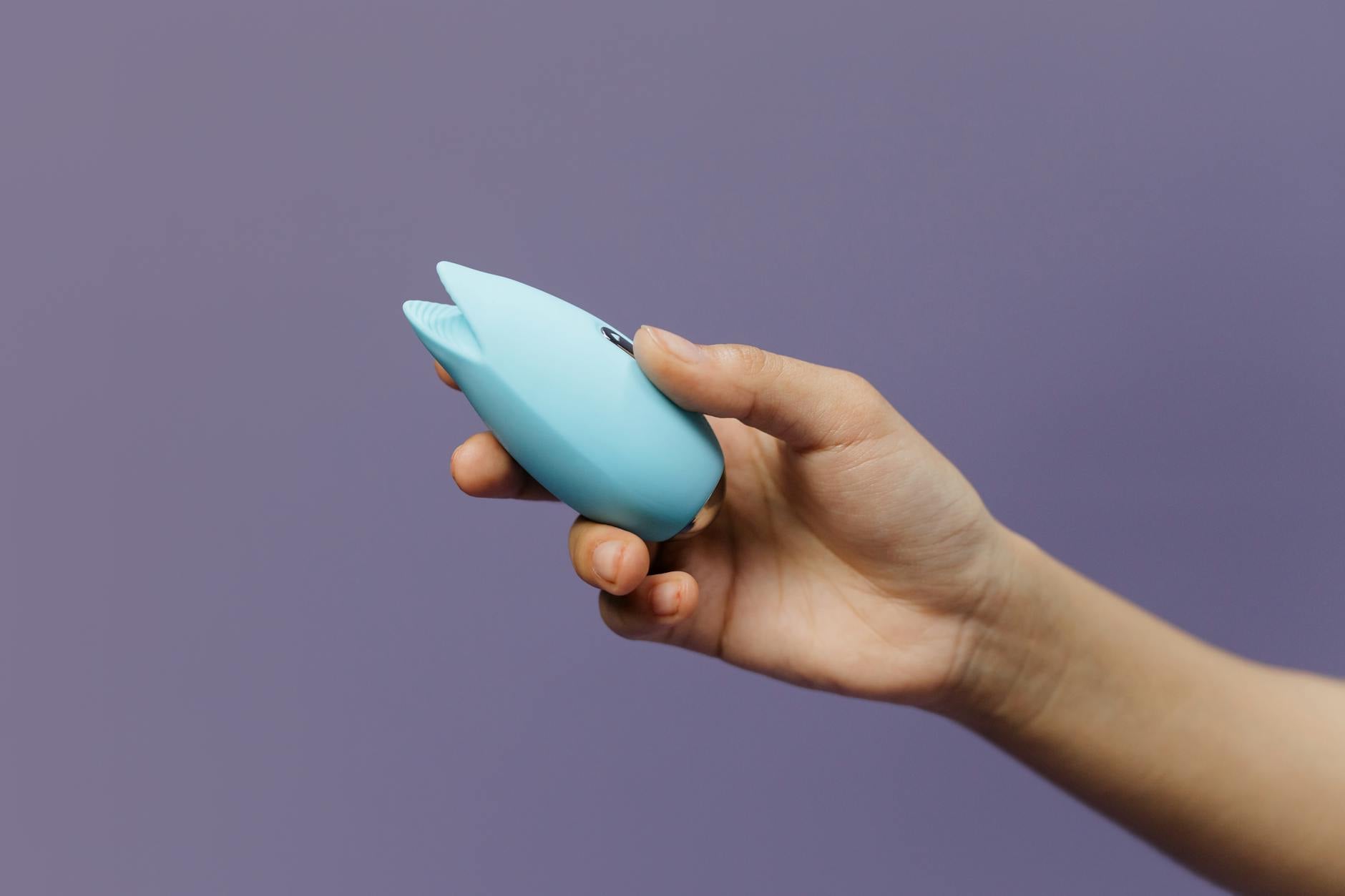
Let's talk about what's actually happening
You're using your lemon vibrator. Everything should feel good. Instead, it feels muted. Distant. Like the sensation isn't landing the way it used to. The problem isn't the toy. It's not your body. It's the stress in your relationship, and it's showing up in your nervous system.
Relationship tension changes pleasure at a neurological level. When you're in conflict or emotional distance with a partner, your parasympathetic nervous system (the one that says "it's safe to feel good") stays offline. Your body can't access pleasure pathways that require you to feel genuinely safe and relaxed.
How stress rewires your pleasure response
When you're in relationship conflict, your amygdala is activated. That's your brain's threat-detection center. It's scanning for danger, even if the danger is just unresolved tension or unmet emotional needs. The problem is that arousal requires the opposite state: calm, trust, and parasympathetic activation.
Think of it like trying to fall asleep in a house where the smoke alarm keeps going off. Your body doesn't stop working. The smoke alarm just won't let anything relax.
With a partner, this gets worse because anticipatory anxiety kicks in. You might worry about their reaction, whether they'll stay engaged, or whether the physical closeness will highlight emotional distance. That background anxiety doesn't prevent sensation. It deadens it. Your clitoris might respond, but the experience feels mechanical rather than pleasurable.
Lemon vibrators, especially air-suction toys like the Lem, are designed to work with your nervous system in a very specific way. They create sustained pressure that builds sensation gradually. But that gradual build only works when your nervous system is downregulated enough to receive it. When you're stressed, that sensitivity gets blocked at the input stage.
The body keeps score, even during solo play
Here's the thing that surprises people: you don't need to be having sex with your partner for relationship stress to affect how a lemon clitoral vibrator feels. Your nervous system doesn't compartmentalize like that. If you're in conflict, your parasympathetic tone stays low even when you're alone.
I see this constantly in my practice. People say, "I feel disconnected from my partner. When I use my vibrator solo, it feels different than it used to." The connection matters because your brain's threat-detection system doesn't switch off just because you're alone. It says, "This person I live with is distant from me. Am I safe?" Your body answers by protecting itself.
This is why some people report that lemon sexual toys feel different after relationship stress than they did before. It's not that your capacity for pleasure changed. Your nervous system's permission to feel pleasure changed.
What actually changes in the sensation
When relationship stress is active, people typically report one or more of these shifts:
Numbness or reduced sensitivity. The vibrator works, but you're not feeling as much texture or nuance. This is partly because your attention is fragmented. Part of your brain is still processing the conflict or distance.
Difficulty reaching plateau or orgasm. The buildup phase takes longer, and you might plateau without moving forward. This is your nervous system saying, "I don't have enough safety cues to go deeper into vulnerability." Orgasm requires a brief surrender. Your body won't surrender when it's on guard.
Sensation that feels more "in your head" than embodied. You might experience pleasure mentally without it landing in your body. That dissociation is protective. Your nervous system is saying, "We're going to monitor this instead of sink into it."
Changed texture preference. Some people find they want firmer pressure or faster patterns when stressed, because their nervous system needs more stimulation to feel anything at all. This is your brain compensating for reduced sensitivity.
None of these mean your lemon vibrator stopped working. They mean your nervous system temporarily can't fully receive what it's offering.
The emotional layer is doing the heavy lifting
I want to be clear about something: this isn't about willpower or being turned on enough. This is neurobiology. When you're in chronic relationship conflict or emotional distance, your brain genuinely cannot produce the neurochemical environment that pleasure requires. Dopamine and oxytocin are lower. Cortisol is elevated. Your system is resourced toward threat management, not pleasure receptivity.
This is actually where relationship-focused work matters more than any physical change. If you're using a lemon clitoral vibrator but the underlying relationship feels unsafe or emotionally distant, no adjustment to technique will fix it. You'd be trying to fix a software problem with hardware.
What actually needs to happen is reconnection. Real reconnection, not surface-level politeness. Your nervous system is responding to genuine emotional availability or its absence. It can tell the difference.
How to rebuild sensation through rebuild
If you're in active conflict, the path forward isn't trying harder with your vibrator. It's addressing the relationship stress first. This looks like:
Honest conversation about what's happening. Not "I want more sex." That frames pleasure as the problem. Instead: "I feel distant from you, and it's affecting how I experience pleasure." This names the real issue.
Reconnection rituals outside the bedroom. I recommend 20 minutes of uninterrupted time together, three times a week, where you're not problem-solving or planning. Just present. This tells your nervous system that safety is returning.
Slowing down intimacy. If you and your partner are trying to move forward with physical connection while the relationship stress is active, start with non-sexual touch. Hand-holding. Massage. Cuddling. This rebuilds the foundation your nervous system needs to access pleasure.
Once your parasympathetic tone starts to recover, your lemon vibrator will start to feel like itself again. Not because anything changed about the toy, but because your body has permission to receive it.
Knowing when to get support
If relationship stress has been ongoing for several months and you're noticing persistent numbness or difficulty with pleasure, talking to a therapist trained in both relationship dynamics and sexuality is really valuable. This isn't a sign something is wrong with you. It's a sign that professional support could help you rebuild both the relationship and your access to pleasure more quickly.
Some people benefit from sex therapy specifically. Others do better with couples counseling that addresses the emotional dynamics first, which allows pleasure to naturally return. Both work. What matters is addressing the stress rather than trying to white-knuckle through it with a lemon sexual toy.
Your body isn't broken. It's communicating something true about your relationship. Listening to that message, rather than pushing past it, is actually how you get your pleasure back.
People also ask
Can relationship stress permanently change how pleasure feels with a Lem vibrator?
No. The changes are temporary and responsive to your nervous system state. Once the relationship stress resolves and your nervous system recalibrates, pleasure sensitivity typically returns to baseline. I've seen this happen consistently. People describe it as "coming back online." The sensitivity was never gone. It was just blocked at the access point.
Should I tell my partner that relationship stress is affecting my pleasure?
Yes, but frame it carefully. Instead of "Your distance is killing my ability to orgasm," try: "I've noticed I feel more pleasure and connection when we're emotionally close. Can we work on that together?" This makes it a shared project rather than blaming them. Most partners actually want to know this, because it reframes intimacy as something they can directly help with.
Does solo pleasure with a lemon vibrator ever feel fully normal during active relationship stress?
Sometimes it does, sometimes it doesn't. It depends on whether the stress is acute (a current fight) or chronic (months of distance). Acute stress typically has a shorter impact on solo play. Chronic stress affects it more deeply because your nervous system stays activated longer. If you're noticing it's consistently different, that's a signal the relationship stress needs attention.
Is this the same as anxiety affecting pleasure?
They're related but different. General anxiety can affect pleasure regardless of relationship status. Relationship stress specifically activates your threat-detection system because it involves someone you depend on. Your brain treats emotional distance from a partner as a safety threat. That's why it has such a direct impact on nervous system regulation.
What if I improve the relationship but pleasure still feels muted?
Then other factors might be at play. Medication side effects, hormonal changes, or individual trauma can also reduce sensation. If the relationship improves but pleasure doesn't return after a few weeks, that's worth discussing with your doctor or a sex therapist. It's not a reflection on you or the relationship. Sometimes there's a separate physical or psychological factor that needs attention.
How long does it take for pleasure sensation to return after relationship stress improves?
Typically, people report noticeable shifts within two to four weeks of genuine reconnection. Deeper recalibration takes a few months. But the change usually feels gradual and marked. You notice your lemon clitoral vibrator feeling different. You notice desire returning. You notice sensation landing in your body rather than staying in your head. This progression is your nervous system saying, "Okay, we're safe again."