Let's name the thing nobody talks about
Antidepressants save lives. They also flatten sensation, kill desire, and make orgasm feel like you're trying to reach someone through thick glass. Both things are true simultaneously, and pretending otherwise is how people suffer in silence for months before admitting the problem to their doctor.
Here's what I see in my practice: someone finally gets their mental health stabilized. They're sleeping, the panic attacks stopped, life feels livable again. Then the sexual side effects hit, and the shame kicks in. "I should be grateful," they think. "Why am I complaining about orgasms when I'm not suicidal anymore?" That thought pattern is the real trap. Your mental health and your sexual health aren't opposing forces. They're connected. And there are concrete, judgment-free ways to address both.
Why antidepressants numb sensation
Most antidepressants work by increasing serotonin availability in the brain. Serotonin is great for mood stability. It's terrible for sexual response. Here's the rough mechanism: serotonin dampens the neurochemicals that trigger arousal, delay ejaculation (in a useful way), and signal pleasure to your brain. The same neurotransmitter systems that keep you from spiraling also make it harder to feel tingling, wetness, erections, and orgasm intensity.
SSRIs (selective serotonin reuptake inhibitors) like sertraline, paroxetine, and fluoxetine are the worst offenders. About 40-60% of people on SSRIs report sexual side effects. SNRIs like venlafaxine also cause problems, but slightly less often. Bupropion, weirdly, is the exception. It doesn't raise serotonin and often preserves sexual function. That's useful data for your doctor.
The numbness isn't in your head. It's measurable. Clitoral sensation decreases. Vaginal lubrication takes longer. Erections become softer. Orgasms, when they happen, feel distant or muted. None of this means you're broken or that the medication is wrong for you. It means your nervous system has adapted to a different chemical environment, and you need a different strategy.
The shift that changes everything
Most people wait passively for sensation to return. It doesn't. Or it takes years. The active approach is to introduce stimulation so intense that it overcomes the dampening effect. This is where lemon vibrators enter the picture.
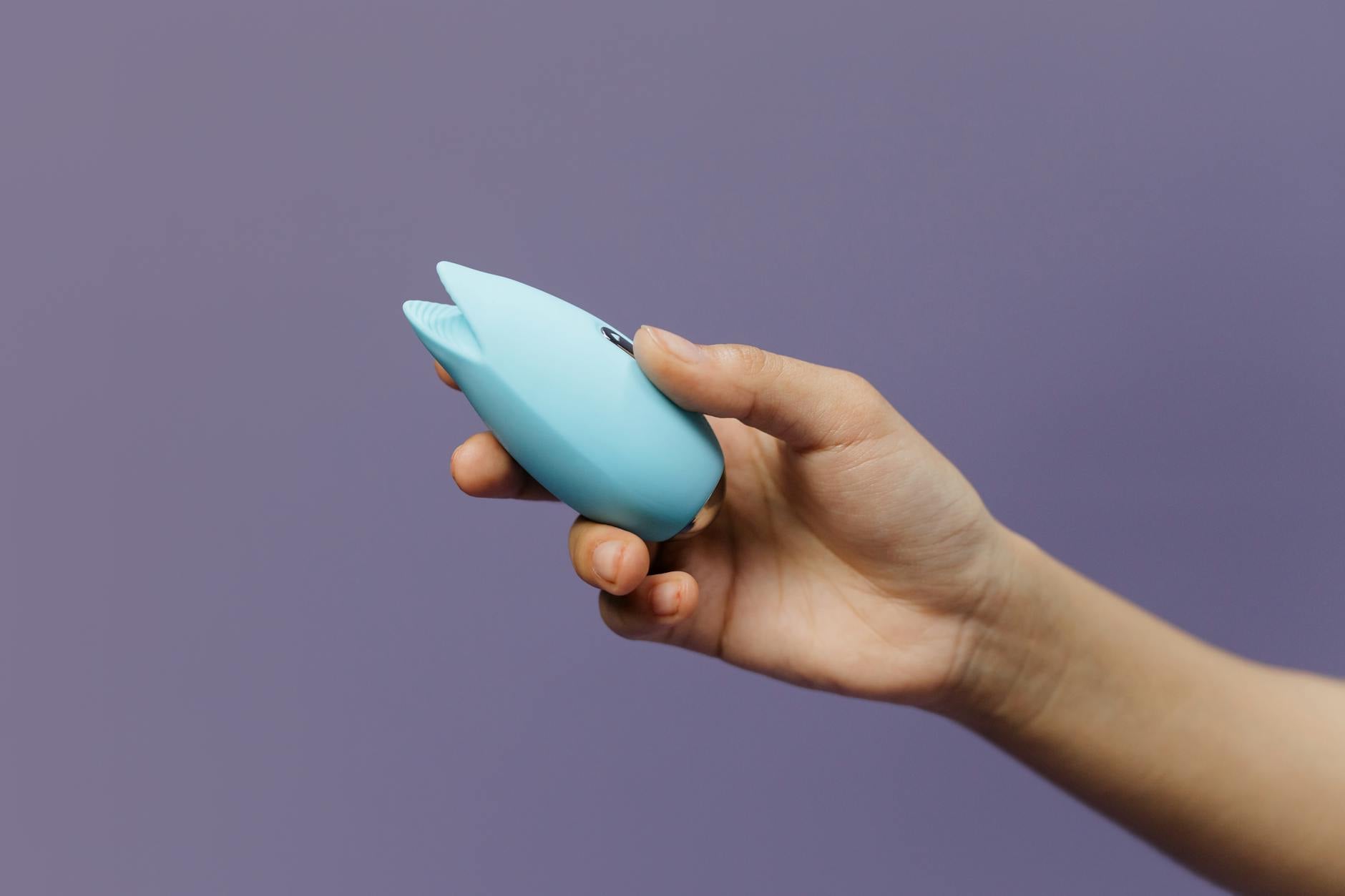
Lemon clitoral vibrators use suction and pulsation patterns that are substantially stronger than fingers or most other toys. They don't rely on subtle sensation. They create concentrated, undeniable stimulation that penetrates the numbness without requiring you to be already aroused. In other words, they work even when your nervous system is dulled.
I recommend lemon vibrators specifically because their air-pulse technology bypasses the threshold problem. Threshold is the minimum stimulation your body needs to register sensation. Antidepressants raise that threshold. A traditional vibrator at setting 3 might have worked before medication. Now you need setting 7 or 8 to feel anything at all. The lemon design gives you access to the intensity you actually need.
How to use a lemon vibrator when numbness hits
Start low, but not the way you would with sensation intact. "Low" for an antidepressant-numbed body isn't actually low. It's setting 5 or 6 on the intensity dial. Let yourself skip the preamble of arousal. You're not broken if you need the vibrator to start the process instead of finish it.
Second: wet everything. Water-based lubricant becomes even more important when sensation is dampened. It's not about physical glide. It's about creating a medium that helps transmit the sensations you do feel. Lubrication acts like an amplifier for subtle nerve signals.
Third: change your timeline. Numbness means longer warmup. Budget 20-30 minutes instead of 10. Your body will feel the vibrator's effects before arousal signals arrive in your brain. That's fine. Sit with the sensation. Let it build slowly. This is actually where many people discover that their orgasm, when it comes, feels different but not worse. Sometimes more localized. Sometimes longer. Different is not the enemy.
Fourth: try pattern cycling. Lemon vibrators have multiple patterns. Numbness responds to variety. Switch every 2-3 minutes. A pattern that does nothing on repeat sometimes unlocks something when you come back to it fresh.
When it's not just the medication
Here's where I need to complicate the story. Sometimes numbness isn't purely chemical. Antidepressants do dampen sensation, but relationship stress, low self-esteem, and anxiety layer on top of that dampening. I've had clients who restored sensation not by switching medications or introducing new toys, but by addressing shame.
If your partner knows you're on antidepressants and has started making comments about sex, that's a relationship problem, not a sensation problem. That needs addressing. How to use lemon vibrators when you feel too self-conscious with a partner walks through that conversation.
If you're grieving the sex you used to have, that's real loss, and it's different from broken sensation. That grief needs language. It needs to be named. Then, once named, you can ask: what does pleasure look like now? It's rarely identical to before. It's often richer because it's harder-won.
The medication conversation with your doctor
Don't suffer through this assuming you can't change anything. There are legitimate adjustments. Some doctors suggest timing: taking your SSRI at night instead of morning sometimes helps if sexual response is better at certain times of day. Some suggest dose adjustment. Some suggest adding bupropion to your existing SSRI, which can restore sexual function while keeping mood stable.
Other options exist too. Switching to a medication with fewer sexual side effects (like mirtazapine or bupropion) is sometimes possible without sacrificing mental health gains. A good psychiatrist will take this seriously. If yours doesn't, find one who does.
Building pleasure outside orgasm
Here's something I tell almost every client dealing with antidepressant-induced numbness: orgasm is not the only pleasure worth pursuing. I know that sounds like consolation-prize thinking, but I mean it literally.
When sensation is dulled, other pleasures often remain intact. Skin-to-skin contact, temperature play, the pleasure of building arousal slowly even if the finish line feels distant, the satisfaction of knowing you tried. These are not substitutes for orgasm. They're a separate category of good.
Some people discover that they prefer longer, less goal-focused sessions because the pressure lifts. There's no orgasm endpoint to chase, so they can actually enjoy the middle. That's not failure. That's adaptation.
When you do use a lemon vibrator, you're not necessarily chasing orgasm. You're chasing sensation. You're reminding your body that pleasure exists. You're fighting back against the flattening. That's enough.
The long game
Antidepressant-induced sexual dysfunction sometimes resolves on its own after 6-12 months. Sometimes it doesn't. Some people stay on the medication forever and learn to work with the dampening. Others adjust medications and find sensation returns. Most land somewhere in the middle: persistent numbness that's manageable with tools, different but not gone.
A lemon vibrator isn't a fix for the chemical change your brain is undergoing. It's a tool. It's a way of saying: I'm not accepting the numbness as inevitable. I'm taking an active role in reclaiming sensation. That distinction matters psychologically. It matters practically. And it matters for your relationship with your own pleasure.
Your antidepressant is keeping you alive. A lemon vibrator helps you remember what it feels like to be alive in your body too.
People also ask
Will a lemon vibrator work if my numbness is severe?
Yes, usually. The whole point of air-pulse technology in lemon vibrators is that it works even when sensitivity is significantly dampened. You might need to use higher intensity settings than you'd expect, and you might need to give it more time, but the concentrated pulsation pattern is specifically designed to penetrate low-sensation situations. That said, if numbness is complete (you feel literally nothing with the vibrator), that's worth mentioning to your prescriber. It might signal that your current medication combination isn't right for you.
Can I use a lemon clitoral vibrator safely with my antidepressant?
Absolutely. There are no drug interactions between SSRIs and vibrators. The vibrator isn't introducing anything chemical into your body. It's just mechanical stimulation. The only caution is the same for everyone: don't use it for so long that you create tissue irritation. Twenty to thirty minutes is fine. Two hours is not. And if you're experiencing any physical pain, address that separately from the numbness issue.
Should I switch my medication to fix sexual side effects?
That's a question for your prescriber, not me. But here's what I'd encourage: don't make the decision between mental health and sexual health as an either-or. They're not. Your doctor's job is to find something that stabilizes your mood while minimizing sexual side effects. Sometimes that exists. Sometimes you need to accept a tradeoff. That conversation is worth having explicitly with your psychiatrist or doctor.
How long does it take for sensation to come back if I switch antidepressants?
It varies wildly. If you switch to bupropion, some people feel it within days. If you're adjusting your dose or timing, it can take weeks. If you're switching SSRIs, sometimes the new one has fewer sexual side effects right away, sometimes it takes a month or two to know. And sometimes you switch and sensation doesn't fully return. The body is not a machine. What works is patience, honesty with your doctor, and tools like lemon vibrators that don't require you to wait passively.
Can lemon vibrators help if my partner has become uninterested because of my sexual side effects?
No. A vibrator fixes sensation. It doesn't fix relationship problems. If your partner has lost interest because antidepressant-induced numbness means less frequent sex, that's a conversation you need to have about desire, expectations, and care. How lemon vibrators help when partners have different sensitivity levels addresses that dynamic. You might also benefit from couples counseling to work through the shift in sexual connection.
Is numbness from antidepressants permanent?
Not always, but it can be. Some people stay on the same medication long-term and experience persistent sexual side effects. Others find they resolve. Some people respond to medication adjustments. There's no universal timeline. What matters is that you're not passively accepting it as inevitable. Tools like lemon vibrators, conversations with your doctor about alternatives, and honest communication with your partner all matter. Numbness doesn't have to mean the end of pleasure. It means you need a different approach.
The bottom line
Your mental health medication is not the enemy. Neither is your body's numbness. What you need is information, the right tools, and permission to care about sensation recovery as much as mood recovery. A lemon vibrator is one piece of that. Honest conversations with your doctor and partner are the other pieces. You deserve to feel good mentally and to feel pleasure in your body. Those things can coexist.