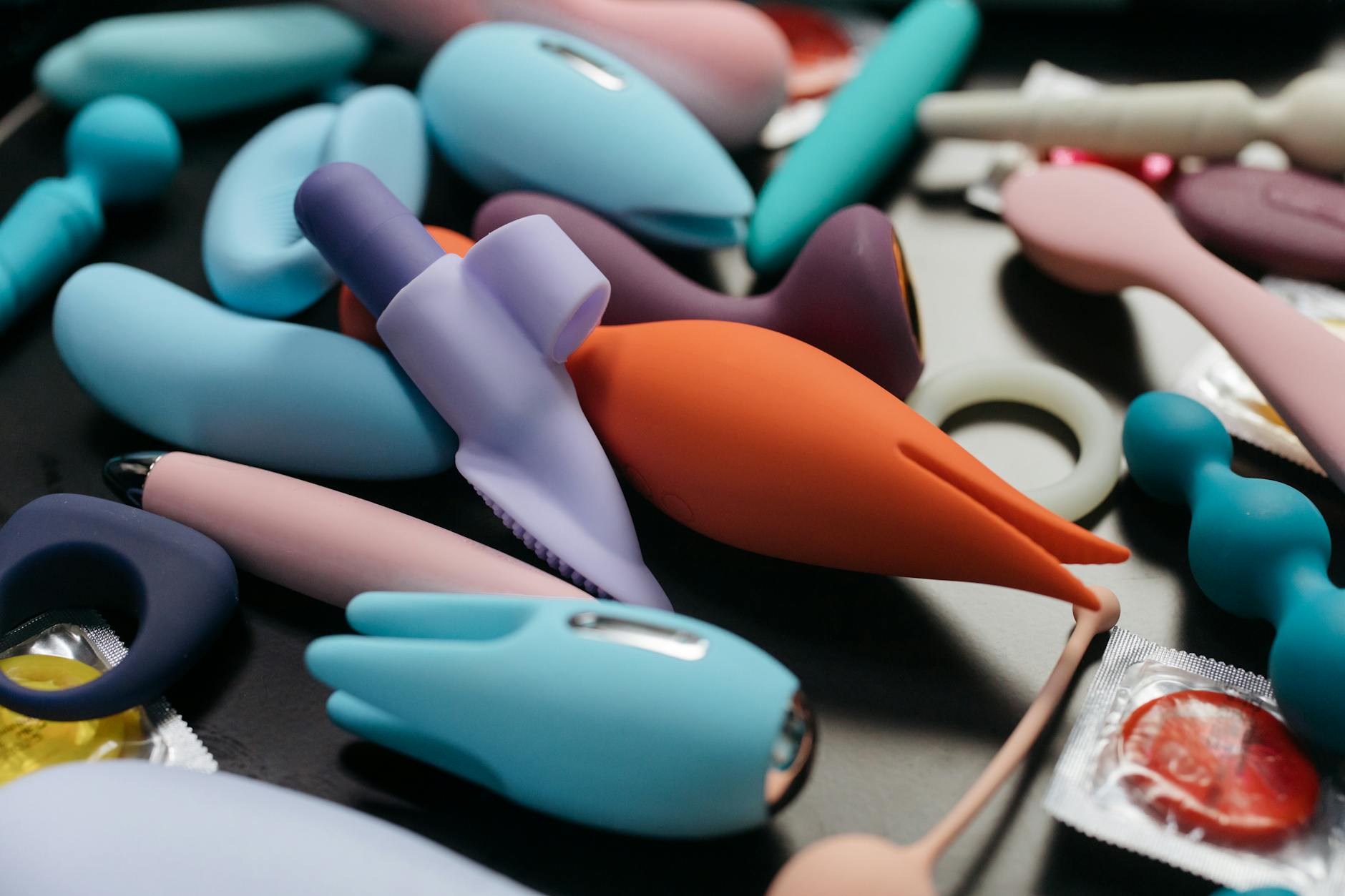
Let's be real about sensation after 40
Nobody warns you that your clitoris might stop talking to you the way it used to. For some people, it happens gradually. One day you notice you need more pressure, or a different angle, or way longer to get there. For others, it's sharper. Something shifts. And suddenly the toys and techniques that worked for two decades feel like they're barely registering.
Here's what's happening: it's not broken. Your nerve endings haven't disappeared. But the tissue around them has changed, circulation patterns shift, and the kind of stimulation that created fireworks at 30 might just feel like background noise at 45.
The good news is that sensation recovery isn't about forcing intensity. It's about working with how your body has changed, not against it. And this is where lemon vibrators and other suction-based clitoral vibrators become genuinely different from what you've probably tried before.
Why sensation dulls after 40 (and it's not what you think)
Most people assume reduced clitoral sensation is purely hormonal. Partially true. But it's more complicated than that, and honestly, more fixable.
Your clitoris has about 8,000 nerve endings clustered in a tiny space. These nerves are sensitive to pressure, vibration, and suction. As you age, three things happen simultaneously. First, the skin around the clitoris naturally loses collagen and elasticity. It becomes slightly thinner. That doesn't mean less sensation, but it does mean the same vibration pattern can feel less distinct. Second, blood flow patterns change. Less consistent blood flow to the area means less engorgement during arousal, which changes how responsive the tissue feels. Third, many of us unconsciously increase pressure over time. We lean into vibrators harder. We need more intensity to feel the same effect. This creates a cycle where lighter, more precise stimulation actually works better, but you've trained yourself to crave the heavy stuff.
Then there's the psychological layer. Midlife often brings relationship shifts, work stress, body image changes, or just the cognitive load of managing a life. Pleasure requires mental presence. If 40% of your brain is thinking about emails or your teenager, your clitoris isn't going to perform like it did when you had fewer distractions.
How suction works differently on mature tissue
Traditional vibrators rely on oscillation. They move back and forth, really fast. This works beautifully on thick, highly engorged tissue. But here's what happens on tissue that's slightly less plump: that same vibration can feel generic, unfocused, or irritating instead of pleasurable.
Lemon vibrators use suction. The Lem, Hello Nancy's lemon clitoral vibrator, works by creating gentle negative pressure and rhythmic suction patterns. This approach has several advantages for sensation recovery.
1. Suction activates different nerve pathways. Your clitoris has both pressure-sensitive nerves and stretch-sensitive nerves. Suction primarily engages the stretch-sensitive nerves, which are fresher, less desensitized. If you've been using traditional vibrators for years, those pressure nerves might feel tired. Switching to suction recruits a different neural network.
2. The sensation is more localized. Suction creates a defined zone of stimulation. You feel exactly where the sensation is happening. Broad vibration can feel diffuse. For people recovering sensation, that specificity matters. Your brain can actually track what's happening, which paradoxically makes the sensation feel stronger.
3. Suction allows for longer sessions without numbness. Traditional vibrators can numb tissue with prolonged intensity. Suction distributes pressure differently, so you can explore for 20, 30, 40 minutes without hitting that desensitized wall. Longer play means more time for arousal to build, which means orgasm often comes from a place of genuine momentum instead of mechanical effort.
How to rebuild clitoral sensitivity with the right tool
Here's the practical part. If you've noticed sensation has dimmed and you're thinking about trying a lemon vibrator or other suction toy, don't just switch from max-intensity traditional vibrator to a suction toy. There's a deliberate way to rebuild.
Start low, very low. If your lemon clitoral vibrator has settings 1 through 10, spend your first three sessions at level 1 or 2. This feels almost gentle. That's intentional. You're teaching your nervous system to notice subtle sensation again. Your brain needs time to re-calibrate what "pleasure" feels like at a lower threshold.
Warm up differently. Spend 15-20 minutes just touching yourself with your hands. No toy. Let blood flow to the area naturally. Let arousal build. Then introduce the toy. This matters far more than most people realize. Sensation recovery isn't about the toy doing all the work. It's about your body remembering how to cooperate.
Use water-based lubricant generously. Thinner tissue benefits from lubrication in ways it didn't before. It changes how the suction feels, making it smoother and more comfortable. The lube also protects tissue, which means you can explore longer without irritation.
Track what works, actually. Spend a few sessions just exploring different patterns, different placements, different durations. Notice what makes your breath catch. What makes you lean into it. What creates that pre-orgasmic feeling. Most people skip this because it feels like "wasting time," but you're literally retraining your body's pleasure response. It's not wasted. It's essential.
The role of your mind in sensation recovery
Here's the part nobody wants to hear but everyone needs to know. Physical tools matter. But your mind matters more.
If you're approaching sensation recovery from a place of "my body is broken and this better fix it," your nervous system picks up on that tension and contracts. Pleasure requires relaxation, trust, and permission. It requires you to believe sensation is still possible.
I work with a lot of people who've spent years thinking their pleasure was on its way out. The moment they give themselves permission to approach it differently (with curiosity instead of pressure), sensation returns. Not because the toy is magic. Because they stopped strangling it with expectation.
Try this: approach a lemon vibrator or suction toy not as a rescue mission, but as an experiment. You're testing something. You're curious. There's no failure state. You're either learning something useful or you're having pleasant time alone. Both are wins.
When sensation recovery points to something else
If you've been working with sensation recovery for several months and nothing is shifting, and you're also noticing it's harder to get aroused, or you're experiencing pain, or desire has completely flatlined, that's worth a conversation with a healthcare provider. Sometimes reduced sensation is a symptom of something else. Diabetes can dull nerve sensation. Thyroid changes affect arousal. Certain medications flatten sexual response. A good doctor can rule those things out.
But in most cases, sensation dulling after 40 is normal aging plus habit plus neural fatigue. And all three of those respond beautifully to a different approach. The Lem and other lemon vibrators work because they interrupt the old pattern and create space for your body to remember what it's capable of.
The timeline for sensation recovery
Don't expect instant results. Real sensation recovery usually takes 4-8 weeks of regular, intentional exploration. You're literally rewiring nerve pathways. That takes time. But the timeline also means you'll likely notice small shifts before you notice major ones. A sensation that felt almost nothing in week one might feel distinct by week three. An orgasm that felt distant might suddenly feel immediate.
Patience isn't passive. It's an active choice to trust the process instead of demanding speed.
People also ask
Can sensation recovery happen at any age after 40?
Yes. I've worked with people in their 50s, 60s, and beyond who successfully recovered sensitivity they thought was gone. Age itself isn't the barrier. Habit, expectations, and using the wrong tools are. If you switch to an approach that works with your current physiology (like suction-based clitoral vibrators) instead of against it, sensation tends to come back.
Is reduced sensation after 40 always a sign of menopause?
Not necessarily. Menopause is one factor, but it's not the only one. Hormonal birth control changes, antidepressants, chronic stress, relationship dynamics, and just using the same stimulation method for decades all contribute. If you haven't hit menopause yet and sensation is fading, look at other variables first. Sometimes it's just that your nervous system got bored with the old pattern.
Do I need to stop using traditional vibrators if I switch to a lemon clitoral vibrator?
Not at all. Many people find that cycling between different tools actually keeps sensation sharp. Use a lemon vibrator as your primary exploration tool while you're rebuilding. But having variety in your toolkit prevents the nervous system from adapting too much to any single pattern.
How does a lemon suction vibrator compare to wand vibrators for sensitivity recovery?
Wand vibrators use broad, powerful oscillation. They're great if you enjoy that intensity, but they're not ideal for sensitivity recovery because they engage the same (potentially fatigued) nerve pathways you've been using. Lemon clitoral vibrators compare differently to traditional wand vibrators because they use suction instead of vibration, which activates different neural networks and allows for more precise, localized stimulation.
Can you use a lemon vibrator if you have reduced sensation from medication?
Often yes, but it depends on the medication. Some antidepressants flatten sexual response temporarily. If you're on a medication that's affecting sensation, a suction-based approach sometimes works better than traditional vibrators because it uses a completely different stimulation mechanism. That said, if medication is the culprit, talk to your doctor about whether alternatives exist or whether adding a complementary medication might help. The toy can support the process, but the medication issue needs addressing first.
How do I know if I'm using a lemon vibrator correctly for sensation recovery?
You should feel specific, localized sensation that's pleasant rather than numb. If you feel nothing, you're likely at too high an intensity (counterintuitively) or you need more warm-up time. If it feels uncomfortable or irritating, the lubricant might be insufficient, or the suction setting is too intense. Correct usage should feel good almost immediately, though the orgasm might take longer to build during recovery. If something feels wrong, turn it off and try again another day with more preparation.
The bottom line
Sensation after 40 is different, but different doesn't mean diminished if you use the right tool and approach. Lemon vibrators work for sensation recovery because they interrupt old patterns and engage fresher neural pathways. But the tool is only part of it. Real sensation recovery comes from patience, curiosity, and permission to explore in a new way.
Your pleasure isn't behind you. It's just asking you to meet it differently. If you're ready to explore, contact Hello Nancy with questions about which lemon clitoral vibrator might work best for your starting point. Or read more about rebuilding pleasure after sensitivity changes.
Your body is still capable. You just need the right invitation.