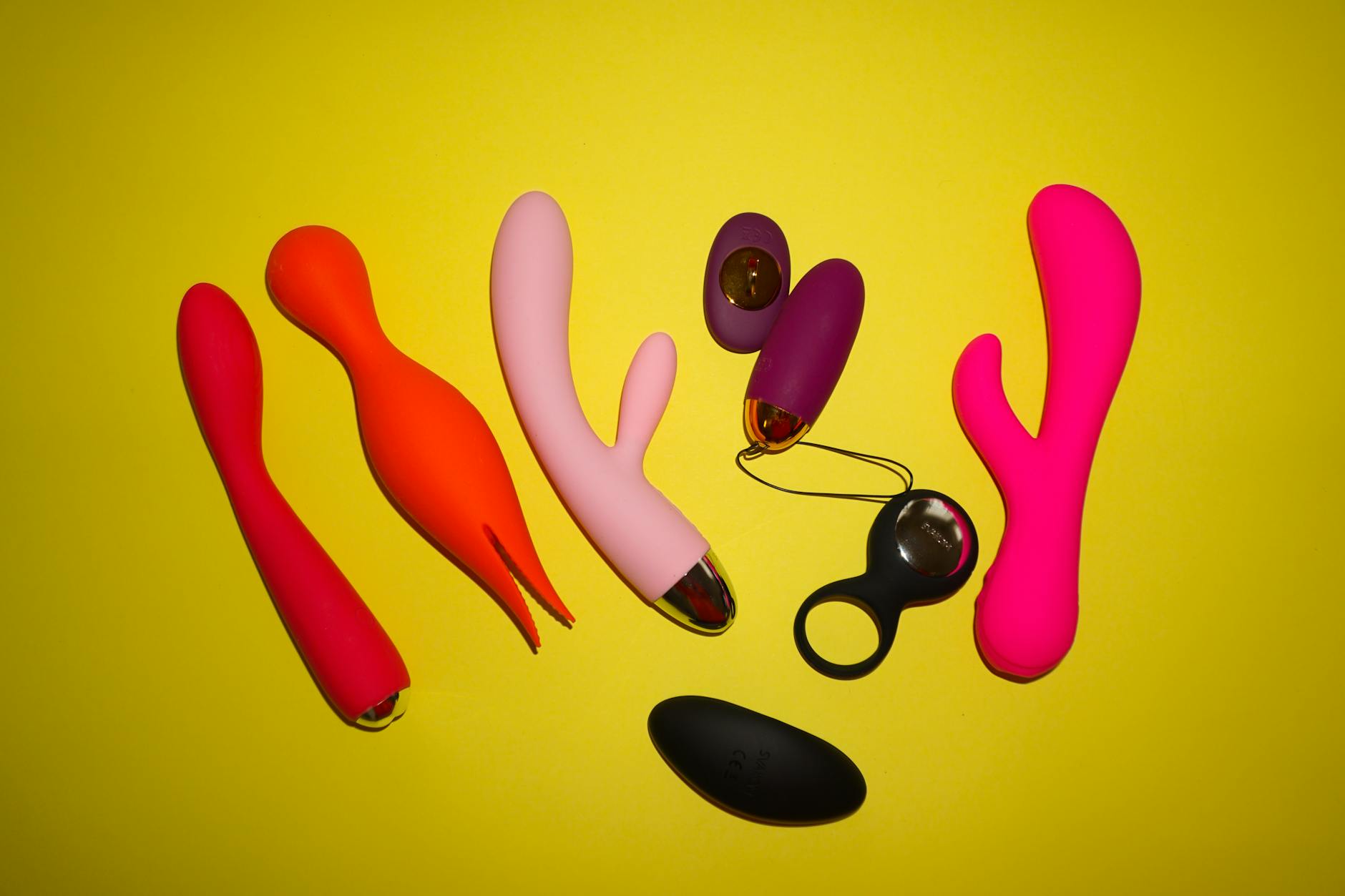
Here's the thing about performance mode
Most people I work with aren't struggling with orgasms or physical sensation. They're struggling with the voice in their head saying "Am I taking too long? Does my partner think this is weird? Should I be enjoying this more?" That internal commentary doesn't just kill the mood. It short-circuits the nervous system's ability to experience pleasure at all.
You can't feel your body while you're auditing your body. And that's where a lot of solo pleasure goes sideways. The moment you're alone, the performance framework should collapse. Instead, many people swap one audience for another: they start performing for themselves, or for an imaginary judgment. Same trap, different judge.
Lemon vibrators and clitoral suction toys work differently than traditional vibrators because they invite gentleness. The suction mechanism doesn't demand intensity. You're not chasing a finishing line. You're inviting sensation.
Why the performance mindset kills arousal
Let's dig into what actually happens when pleasure becomes a task instead of an experience.
Your nervous system has two main modes: sympathetic (alert, evaluating, goal-focused) and parasympathetic (calm, present, receptive). Orgasms and genuine pleasure live in the parasympathetic system. But the moment you switch into "I need to make this happen," your nervous system tips toward sympathetic. Your body gets ready for action, not sensation. Blood pools toward large muscles instead of your genitals. Your breathing gets shallow. Sensation dulls.
Now layer in cultural messages: sex should look a certain way, take a certain amount of time, feel a certain intensity. You should want it constantly. If you don't come immediately, something's wrong with you. If you take time to warm up, you're broken. That's a lot of invisible scaffolding, and most of it is noise.
The research backs this up. Studies on arousal consistently show that people (especially people with vulvas) need mental space and permission to get there. Not willpower. Permission. Lemon vibrators help create that permission because they're fundamentally about gentleness. They're not built for speed or power. They're built for patience.
The difference between suction and traditional vibration
When you use a standard vibrator, your body is in some level of constant engagement with the toy. The vibration is persistent, rhythmic, often intense. You're tracking it, riding it, chasing the wave.
Suction feels different. It creates a gentle pressure and release, almost like a rhythm that mirrors natural arousal. The Lem and other lemon clitoral vibrators use air-pulse technology, which means the sensation comes from gentle suction, not relentless vibration. Your clitoris isn't being bombarded. It's being invited.
This matters more than it sounds. When sensation feels demanding, your body tends to tense in response. When sensation feels generous, your body relaxes into it. Relaxation is literally the precondition for pleasure in the nervous system.
Starting with the mindset shift
Before you pick up the toy, do this: write down what you think you "should" feel or want. Be specific. "I should come in 5 minutes," or "I should want this three times a week," or "I shouldn't need it at all." Then throw it away. Literally delete it.
Now tell yourself something true: "My pleasure is not a performance. There's no timeline, no audience, no metric I'm failing." This isn't self-help fluff. It's literally rewiring which nervous system mode is active.
Set a time boundary (say, 30 minutes) and a physical boundary (phone off, door locked). Tell your brain: "This time is cordoned off. Nothing else exists right now." Your nervous system actually believes environmental signals. Ritual matters.
How to use a lemon vibrator when pleasure feels like a chore
Start without the toy. Spend 5-10 minutes just breathing and noticing your body. Not fixing anything. Not chasing anything. Just noticing what's there. Where's tension? Where's warmth? What's actually calling your attention?
When you pick up the Lem or another lemon clitoral vibrator, start on the lowest setting. Touch your clitoris slowly first without turning it on. Get familiar with what you're working with. Some people find direct stimulation on the clitoris itself feels overwhelming. Others prefer it. Neither is right. Your preference is right.
Turn the toy on at level 1. Let it sit. Don't chase sensation. Let sensation come to you. Move very slowly. Spend 2-3 minutes at each intensity level before moving up. The point isn't to get somewhere. The point is to notice what each level feels like when you're actually present for it.
If your mind starts narrating ("Is this working? Am I broken? Should I feel more?"), that's not failure. That's just your nervous system checking in. Notice the thought, don't argue with it, and gently bring your attention back to pure physical sensation. What does the suction feel like against your skin right now? Just that.
The role of time and breathing
Almost nobody gives themselves time. You have 10 minutes between work and a meeting, so you rush through it. Or you have 20 minutes and you're anxious that you're "taking too long." Neither works.
If you genuinely want to experience pleasure without performance pressure, budget 30-45 minutes and actually spend most of it not climaxing. Spend it feeling. Spend it breathing. Spend it noticing.
Breathing is underrated in pleasure work. Most people hold their breath during arousal because that's what the performance model teaches: tense up, chase the peak, release. But shallow breathing keeps you in sympathetic mode. Deep breathing tells your nervous system it's safe to open.
Breathe in through your nose for 4 counts, out through your mouth for 6 counts. Do this while you're using your toy. The longer exhale signals parasympathetic activation. Your body will respond.
When pleasure still feels obligatory
Sometimes the performance pressure isn't really about the act itself. It's coming from somewhere deeper: a relationship dynamic where you feel you need to want sex to prove something, or cultural conditioning that says "real women" want sex constantly, or past experiences that taught you pleasure isn't safe.
In those cases, a lemon vibrator is helpful, but the real work is in your mindset. Consider whether how lemon vibrators help when you feel disconnected from pleasure after stress resonates with you, or whether something deeper might need attention.
If you're in a relationship, the dynamic matters. Does your partner know you're moving away from performance mode? Have you told them "I need you to stop asking if I came" or "I need you to give me space"? Your partner can't read your mind. The clearest gift you can give yourself and them is clarity: "I'm working on experiencing pleasure differently. Here's what I need from you: nothing. Just let me have this." That's not selfish. That's honest.
The long game
Using a lemon vibrator without performance pressure doesn't mean you'll suddenly have multiple orgasms or feel fireworks. It means you'll probably feel more. You might feel less, at first. You might feel confused or sad or just... neutral. That's all data. That's all part of actually being in your body instead of auditing it.
The shift happens over weeks or months, not the first time. Your nervous system is literally re-learning that pleasure is safe, that it's not a task, that your body is allowed to unfold at its own speed. Give it time.
FAQ: Pleasure without the pressure
How do I know if I'm actually enjoying lemon vibrators or just going through the motions?
If you're thinking about whether you're enjoying it, you're still somewhat in performance mode. Real enjoyment is pre-verbal. It's a felt sense. You know the difference between eating a meal you love and eating something that tastes fine. Pleasure without pressure feels like that meal you love. If you're consistently neutral or numb, that's worth exploring with a sex therapist or coach.
Can I use lemon clitoral vibrators if I have anxiety during sex?
Absolutely. Because suction-based toys like the Lem feel gentler and less demanding than traditional vibrators, many people with anxiety respond really well to them. Start in a space where you feel entirely safe. Set a timer to ease performance pressure ("I have 30 minutes, then I'm done"). If anxiety spikes, pause. Notice it without judgment. Breathe. You're not failing.
What if my partner thinks it's weird that I want to use a toy alone?
That's their anxiety talking, not a reflection on you. Solo pleasure and partnered pleasure are completely separate experiences. They serve different purposes. Using a lemon vibrator on your own isn't a referendum on your partner or your relationship. It's you learning your own body without a second nervous system in the room. Once you know what you like when there's no pressure, partnered sex often becomes easier. But that's a bonus. The primary reason is that you deserve to know what pleasure feels like when there's no audience at all.
How long should I expect it to take before I stop feeling self-conscious?
That varies wildly. Some people shift their nervous system in one session. Others need a few weeks of consistent, pressure-free exploration. The key is consistency without expectation. Using your Lem once and feeling weird is normal. Using it twice and still feeling weird is also normal. By week three or four of regular use with genuine relaxation (not goal-focus), most people notice a shift.
Is it normal to not want to use a vibrator when I'm with my partner?
Completely normal. Many people find they want toys in solo sessions (where the vibe is about presence and gentleness) and don't want them in partnered sex (where the dynamic is different). Others use them during partnered play. It's not either-or. It's whatever works for your nervous system in that particular context.
What if I use lemon vibrators regularly but don't orgasm every time?
Welcome to actual pleasure. If your only metric is orgasm, you're still in performance mode. Pleasure without pressure often includes sessions where nothing "happens," and that's not a failure. You might feel aroused, relaxed, or just present. You might feel curious. All of those are successes if you're actually present for them. The goal isn't to make something happen. The goal is to experience what's actually there.